Efficiently managing your budget and tracking expenses are essential components of financial stability and growth. A Weekly Financial Planner enables you to monitor your income, plan upcoming expenditures, and set realistic saving goals to stay on track. Explore the Excel template below to start organizing your finances with ease and precision.
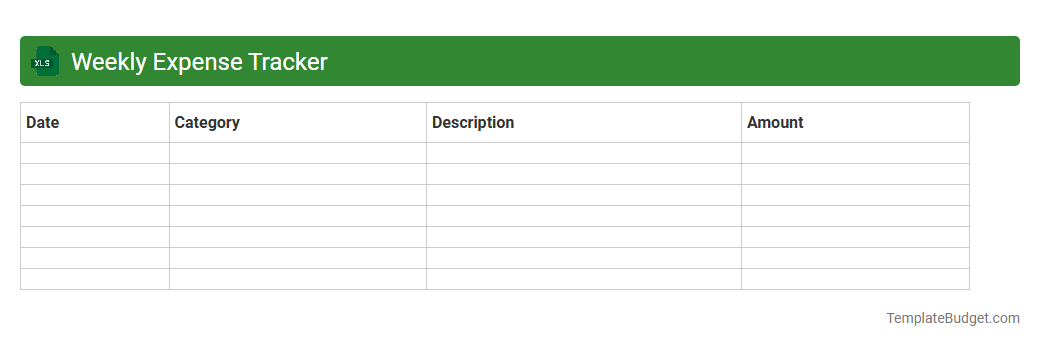
Weekly Expense Tracker
An Excel document titled Weekly Expense Tracker typically contains categorized columns such as Date, Description, Expense Category, Payment Method, and Amount Spent, enabling precise financial monitoring. It often includes built-in formulas to calculate weekly totals and average expenditures, providing clear insights into spending habits. Visual elements like bar charts or pie charts are commonly embedded to offer a quick overview of expense distribution over the tracked period.
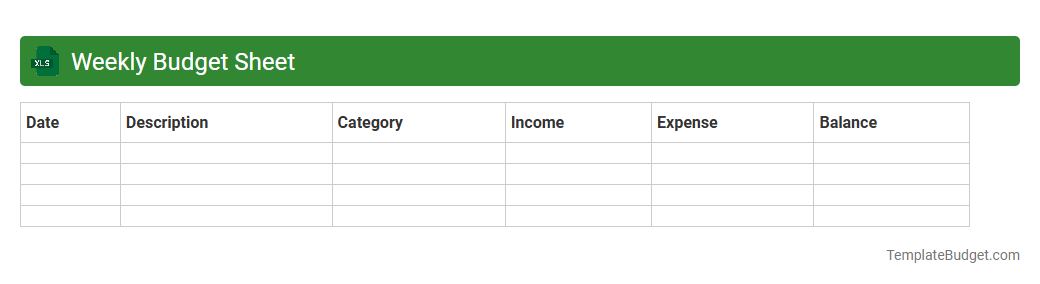
Weekly Budget Sheet
A Weekly Budget Sheet in an Excel document typically contains rows and columns detailing income sources, expense categories, and budgeted versus actual amounts. It includes formulas to calculate totals, variances, and savings for each week, enabling users to track financial performance accurately. Charts or graphs may also be embedded to visually represent spending patterns and budget adherence.
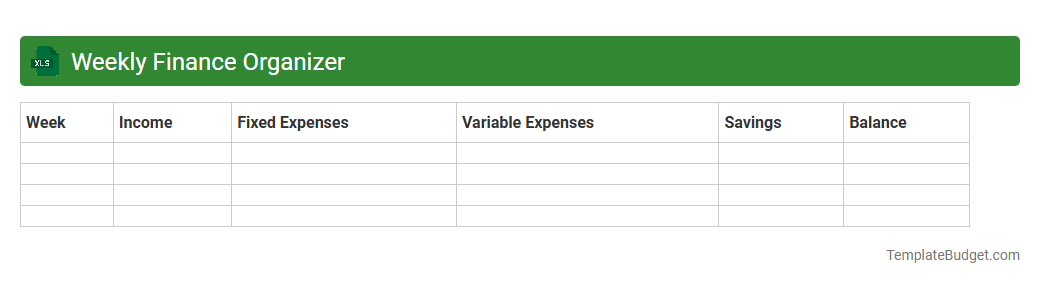
Weekly Finance Organizer
A Weekly Finance Organizer Excel document typically contains sheets for tracking income, expenses, and savings on a weekly basis. It includes columns for date, category, description, amount, and payment method, with formulas to calculate totals, balances, and budget variances. Visual elements like charts and graphs help analyze spending patterns and monitor financial goals effectively.
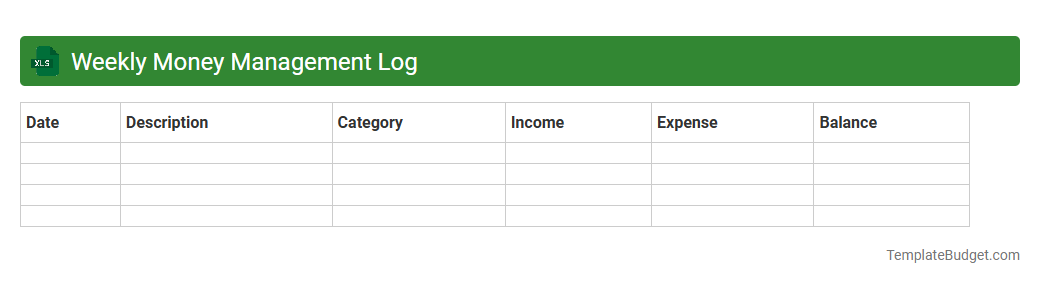
Weekly Money Management Log
A Weekly Money Management Log Excel document typically contains categorized columns for date, income sources, expenses, balance, and notes, enabling comprehensive tracking of financial activities over a specified week. It often includes formulas to automatically calculate totals, variances, and savings goals, enhancing budget accuracy and financial insight. Graphs or charts may be integrated to visually represent spending patterns and cash flow trends for effective money management.
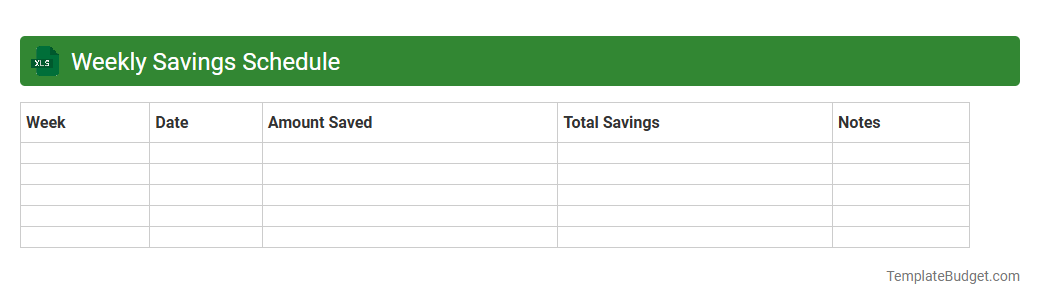
Weekly Savings Schedule
An Excel document titled "Weekly Savings Schedule" typically contains columns for dates, savings goals, amounts saved each week, and cumulative totals. It often includes formulas to calculate progress percentage and future savings projections. Visual elements like charts or conditional formatting help track and motivate consistent savings behavior.
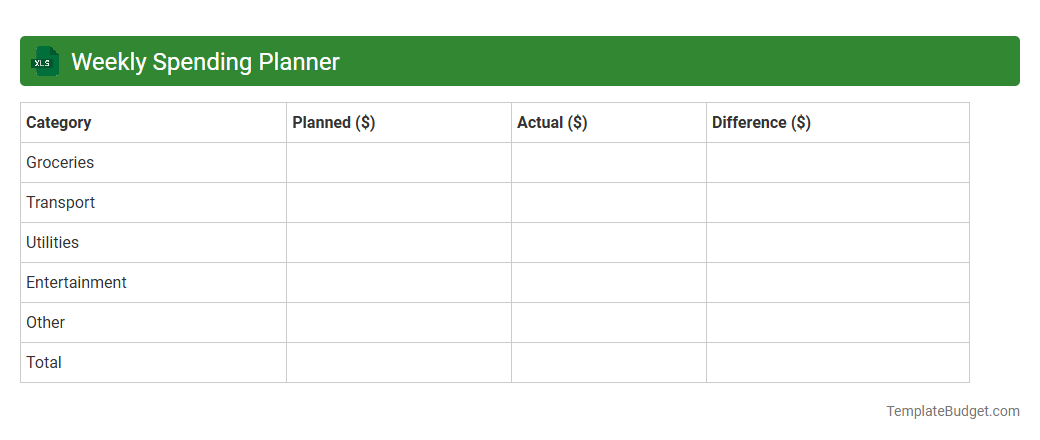
Weekly Spending Planner
A Weekly Spending Planner Excel document typically contains categorized expense tracks such as groceries, utilities, transportation, and entertainment, organized by date and amount. It includes columns for budgeted amounts, actual spending, and variance to help users monitor financial habits effectively. Charts or graphs may be embedded to visualize spending trends and identify areas for cost-saving.
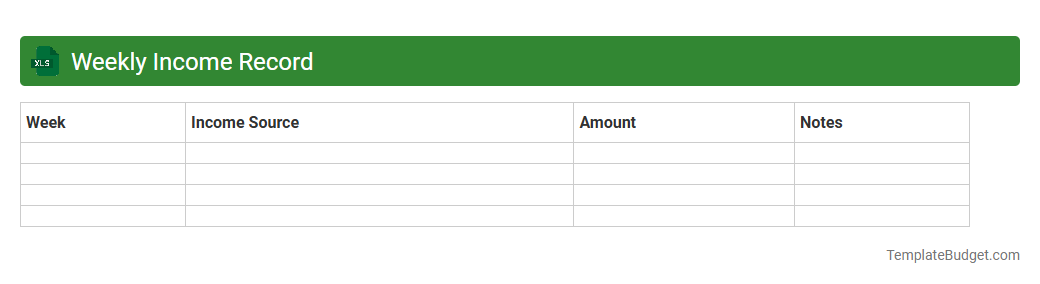
Weekly Income Record
An Excel document titled "Weekly Income Record" typically contains columns for dates, income sources, amounts earned, and payment methods. It may include rows for daily or weekly entries, summaries for total income, and calculated fields such as averages or cumulative sums. Charts or graphs are often embedded to visualize income trends over the recorded period.
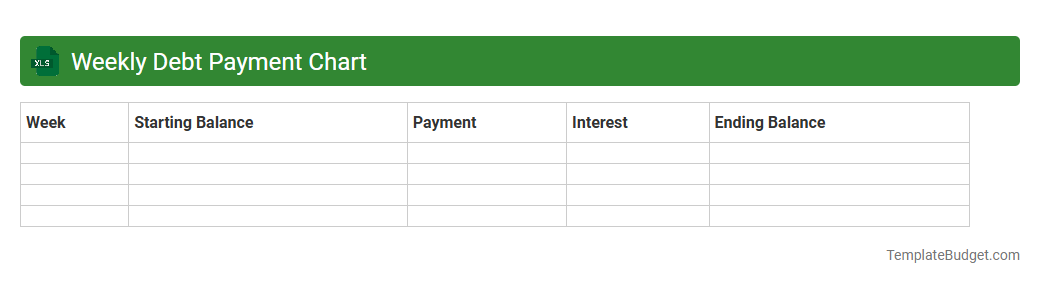
Weekly Debt Payment Chart
A Weekly Debt Payment Chart Excel document typically contains columns for debt categories, payment amounts, due dates, and remaining balances. It often includes formulas to calculate total weekly payments and track progress toward debt reduction goals. Visual elements like bar charts or graphs may be incorporated to provide clear insights into payment distribution and outstanding debt over time.
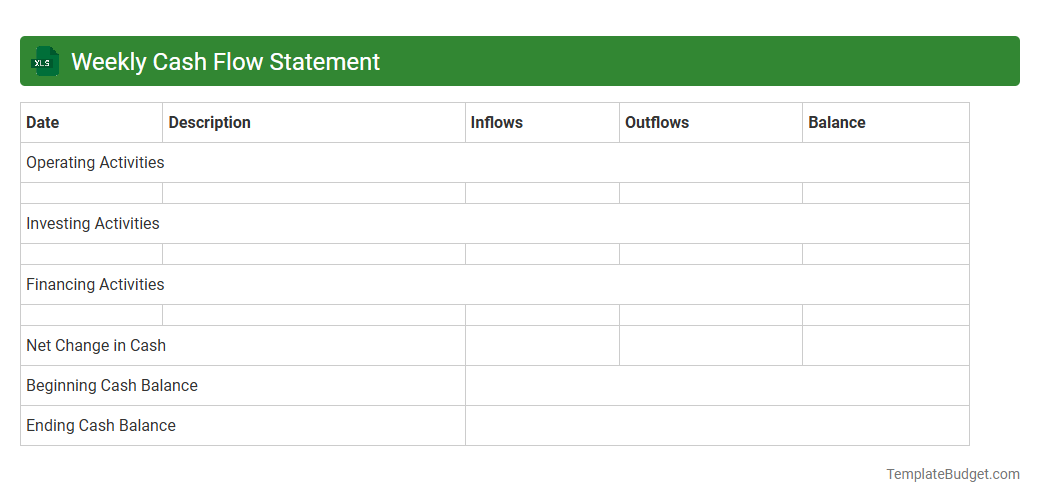
Weekly Cash Flow Statement
A Weekly Cash Flow Statement in an Excel document typically includes sections for beginning cash balance, cash inflows such as sales receipts and loan proceeds, and cash outflows including operating expenses, payroll, and loan payments. The spreadsheet often features formulas to calculate net cash flow for the week and ending cash balance, providing a clear picture of liquidity. Columns or rows may be organized by dates or categories to facilitate tracking and forecasting cash movements.
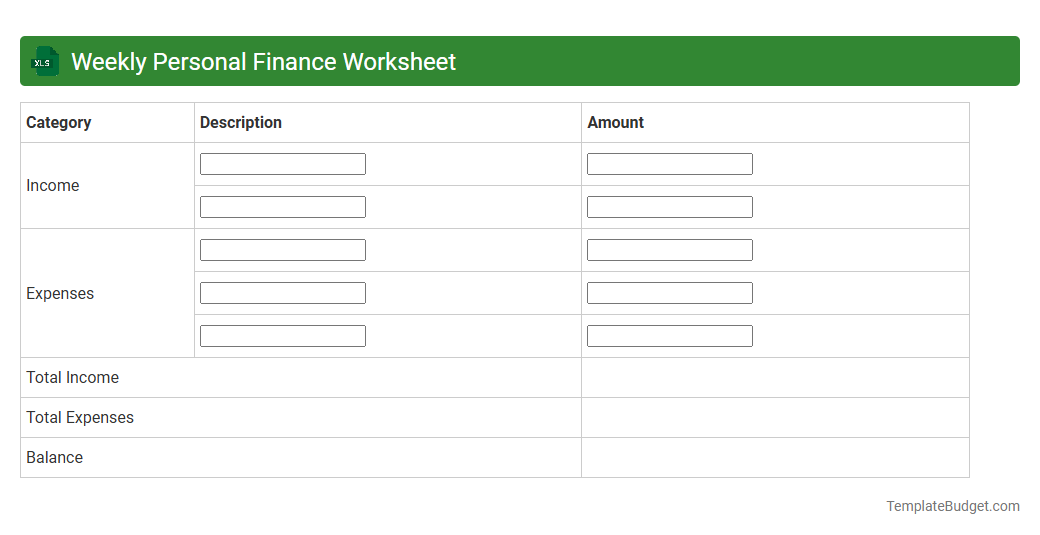
Weekly Personal Finance Worksheet
A Weekly Personal Finance Worksheet in Excel typically includes categorized income sources, itemized expenses, and sections for tracking savings and investments. It often contains formulas to automatically calculate weekly totals, budgets versus actual spending, and remaining balances. Visual elements such as charts or graphs are frequently embedded to provide intuitive insights into financial habits and progress toward financial goals.
Introduction to Weekly Financial Planning
Weekly financial planning allows individuals to manage their money with precision, focusing on short-term goals to achieve long-term success. This method breaks down complex financial tasks into manageable steps. Weekly financial planning creates a proactive approach to budgeting.
Benefits of Using a Weekly Financial Planner
Using a weekly financial planner enhances control over your spending habits and improves cash flow awareness. It helps in identifying spending patterns and adjusting budgets accordingly. The key benefit is fostering financial discipline and avoiding debt.
Setting Your Weekly Financial Goals
Defining clear weekly financial goals directs your focus toward achievable milestones, such as saving a certain amount or paying off debts. Goals should be specific, measurable, and realistic to maintain motivation. Weekly goal setting is an essential step in financial planning.
Tracking Income and Expenses Each Week
Accurately monitoring all sources of income and every expense ensures you stay within budget and avoid overspending. Regular tracking enables quick adjustments before financial issues escalate. Consistent tracking is vital for maintaining financial health.
Prioritizing Bills and Essential Payments
Ensuring that bills and essential payments are prioritized prevents late fees and maintains your credit score. Creating a payment schedule aligned with your cash flow helps avoid financial stress. Prioritizing expenses secures your financial obligations efficiently.
Allocating Funds for Savings and Investments
Designate a portion of your weekly income towards savings and investments to build wealth over time. Treat these allocations as mandatory expenses to reinforce the habit of saving. Consistent fund allocation strengthens financial resilience.
Managing Variable and Unexpected Expenses
Prepare for unforeseen costs by including a buffer in your weekly budget to handle emergencies smoothly. Managing variable expenses requires flexibility and smart adjustments to spending habits. Controlling unexpected costs safeguards your financial stability.
Tools and Templates for Weekly Financial Planning
Utilize digital tools and professional templates designed to simplify the budgeting process and enhance accuracy. These resources provide structure and make financial tracking more efficient. Financial planning templates are invaluable aids for effective budgeting.
Common Mistakes to Avoid in Weekly Budgeting
Avoid common pitfalls such as underestimating expenses or neglecting to update your budget regularly. Ignoring small purchases can accumulate and disrupt the budget. Steering clear of these budgeting mistakes fosters better financial outcomes.
Tips for Sticking to Your Weekly Financial Plan
Stay committed by reviewing your weekly plan regularly and adjusting goals as needed. Use reminders and rewards to maintain motivation and accountability. Following these tips ensures long-term budget adherence.
More Weekly Excel Templates