A School Budget Worksheet is an essential tool for managing educational expenses and ensuring efficient allocation of resources. It helps administrators and educators plan for staffing, supplies, and extracurricular activities while maintaining financial transparency. Explore the Excel template below to streamline your school budgeting process effectively.
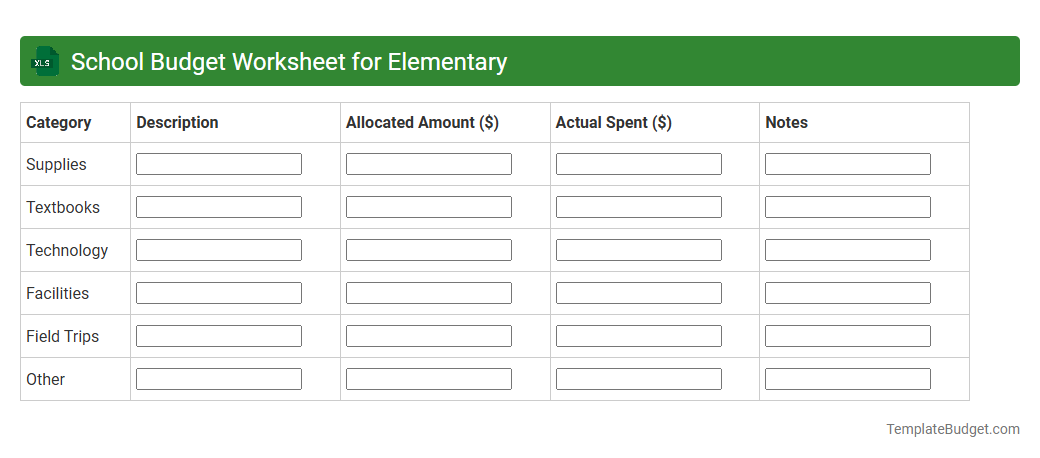
School Budget Worksheet for Elementary
An Excel document titled "School Budget Worksheet for Elementary" typically contains detailed financial categories such as staffing salaries, classroom supplies, facility maintenance, and extracurricular program funding. It includes itemized cost estimates, allocation totals, and budget variance tracking to ensure efficient fund management. Charts and formulas often automate calculations, providing clear insights into budget distribution and financial planning.
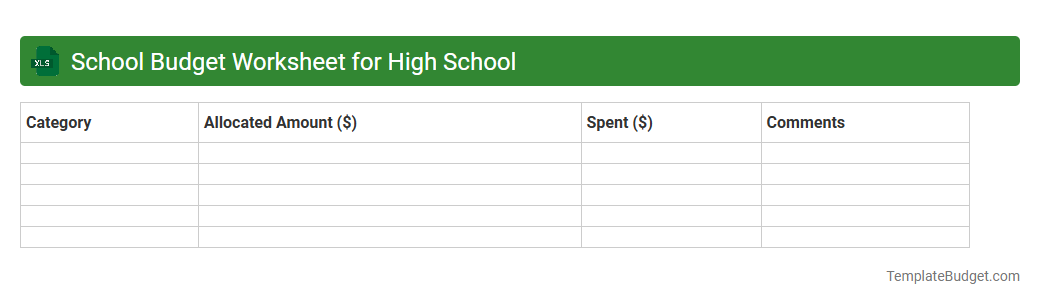
School Budget Worksheet for High School
An Excel document titled "School Budget Worksheet for High School" typically contains categorized sections for projected income, including state funding, grants, and fundraising revenue, alongside detailed expense categories such as salaries, classroom supplies, facility maintenance, and extracurricular activities. It often includes formulas for automatic calculations of totals, variances, and percentage allocations to ensure transparent financial planning and tracking. Charts and graphs may be embedded to visualize budget distribution and spending trends throughout the academic year.
Detailed School Budget Worksheet
A Detailed School Budget Worksheet typically contains categorized expense and revenue sections, including salaries, benefits, supplies, equipment, and facility costs. It features line items for federal, state, and local funding sources, along with projected and actual expenditures for each budget category. Pivot tables, formulas, and charts are often embedded to analyze budget variance and forecast future financial needs accurately.
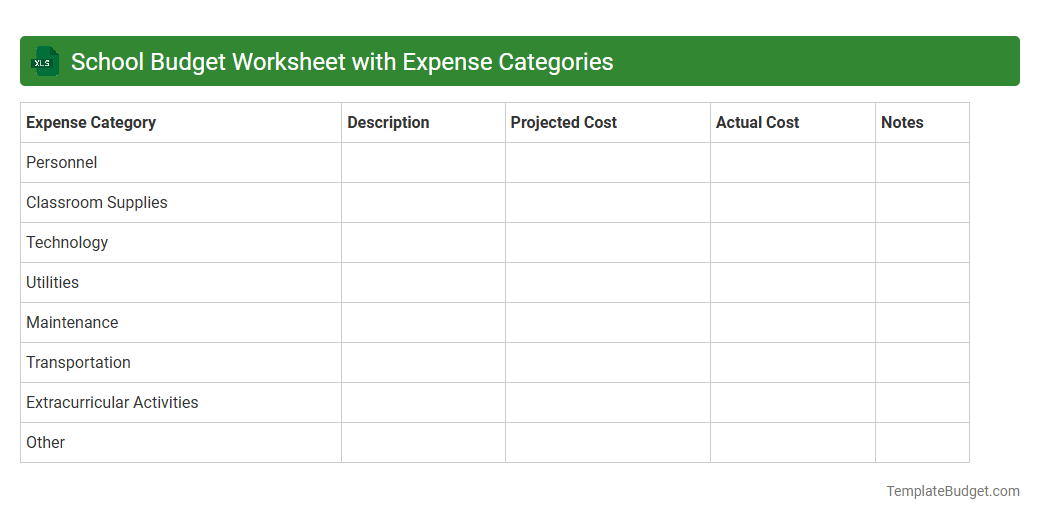
School Budget Worksheet with Expense Categories
A School Budget Worksheet in Excel typically contains detailed expense categories such as salaries, classroom supplies, maintenance costs, extracurricular activities, and administrative expenses. It includes columns for budgeted amounts, actual expenditures, and variance analysis to track overspending or savings. Formulas and pivot tables are often integrated to automate calculations and provide a clear financial overview for school administrators.
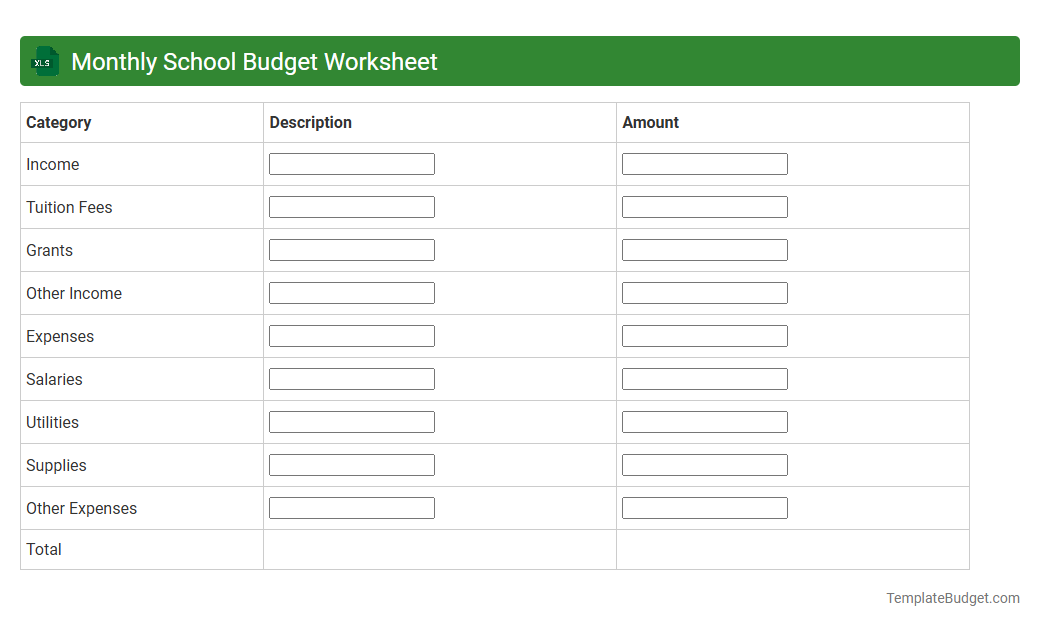
Monthly School Budget Worksheet
A Monthly School Budget Worksheet in Excel typically contains detailed categories for income sources such as government funding, grants, and donations, alongside expense sections including salaries, utilities, supplies, and maintenance costs. The worksheet includes formulas to calculate totals, variances, and budget balances, helping to monitor financial health and ensure funds are allocated appropriately throughout the school year. Charts and pivot tables may be embedded to visually represent spending patterns and forecast future budget needs.
Annual School Budget Worksheet
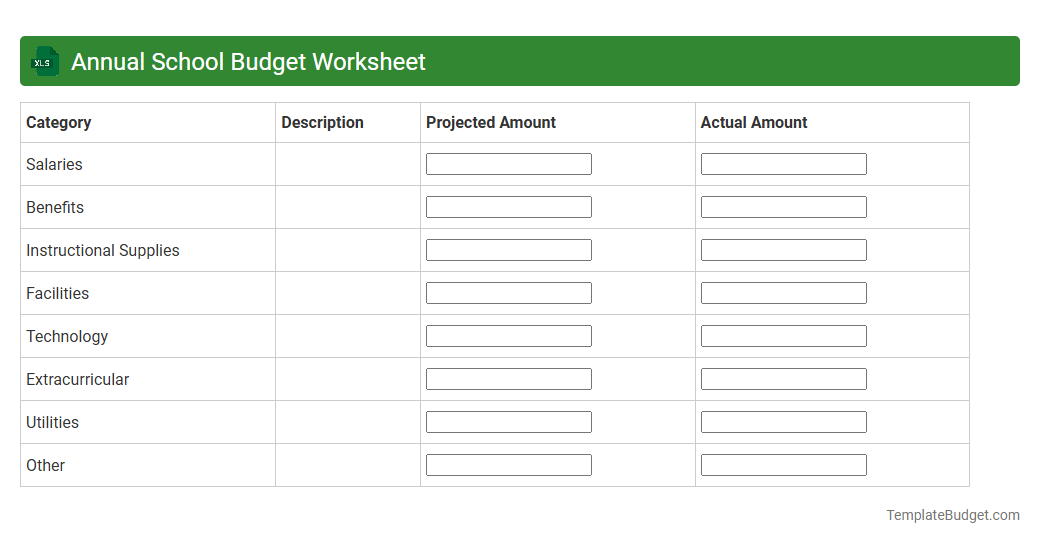
An Annual School Budget Worksheet typically includes detailed sections for revenue sources such as government funding, grants, and donations, alongside categorized expense items like salaries, supplies, maintenance, and extracurricular activities. It features monthly or quarterly columns to track income and expenditures over the fiscal year, enabling precise financial planning and adjustments. Built-in formulas calculate totals, variances, and forecasts, helping schools maintain balanced budgets and allocate resources efficiently.
School Budget Worksheet for Teachers
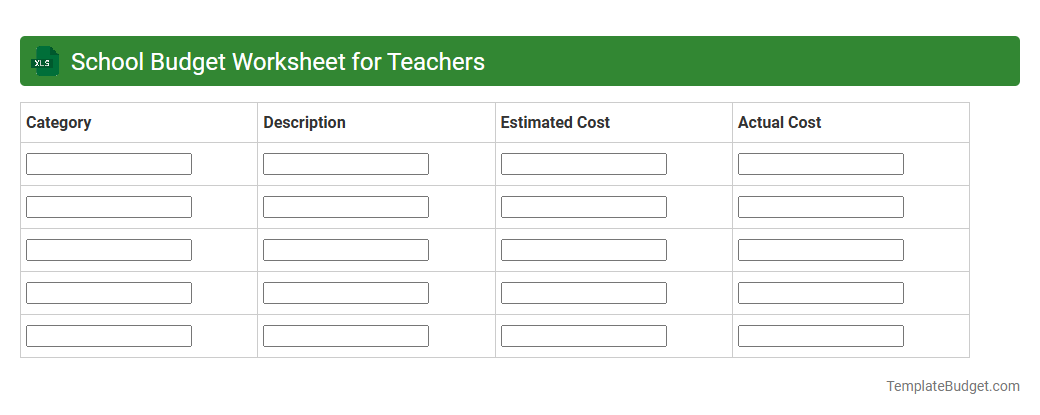
A School Budget Worksheet for Teachers typically contains categorized expense sections such as classroom supplies, educational materials, technology resources, and extracurricular activity funding. It includes detailed budget allocations, cost estimates, and actual expenditures to track spending accuracy. The document often features formulas for summing totals, variance analysis, and projecting future budget needs.
School Budget Worksheet for Administrators
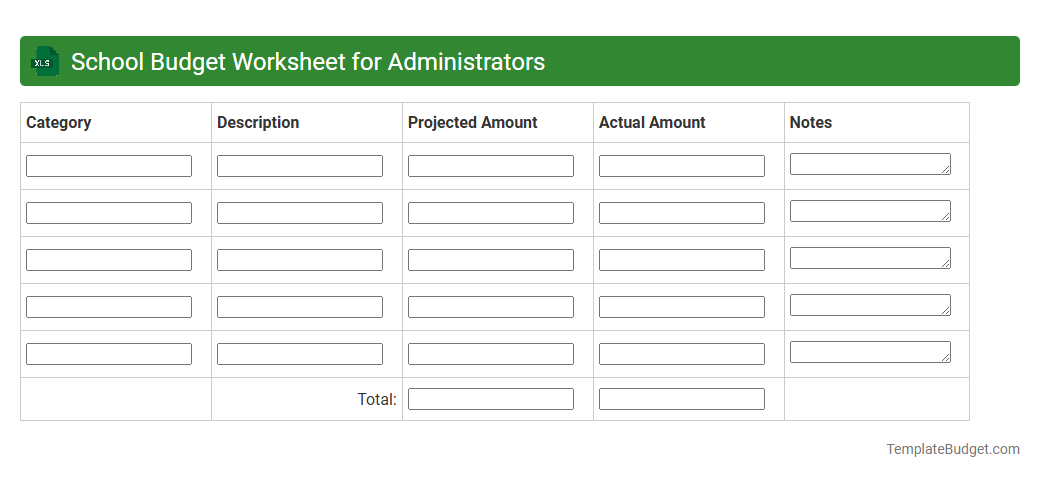
A School Budget Worksheet for Administrators typically contains detailed sections for revenue sources such as state funding, local taxes, and grants, alongside categorized expense fields including salaries, supplies, technology, and facility maintenance. It often incorporates formulas for automatic calculations of totals, variances, and percentage allocations to ensure accurate financial tracking and planning. Essential features may include charts or graphs for visual budget analysis, as well as notes or comments for financial annotations and future projections.
School Club Budget Worksheet
A School Club Budget Worksheet in Excel typically includes categorized sections for income sources such as membership fees, fundraising events, and donations, alongside expense categories like supplies, event costs, and administrative fees. It features columns for budgeted amounts, actual expenditures, and variances to track financial performance accurately. Formulas and charts may be embedded to automate calculations and provide visual summaries of the club's financial status.
Classroom Budget Worksheet
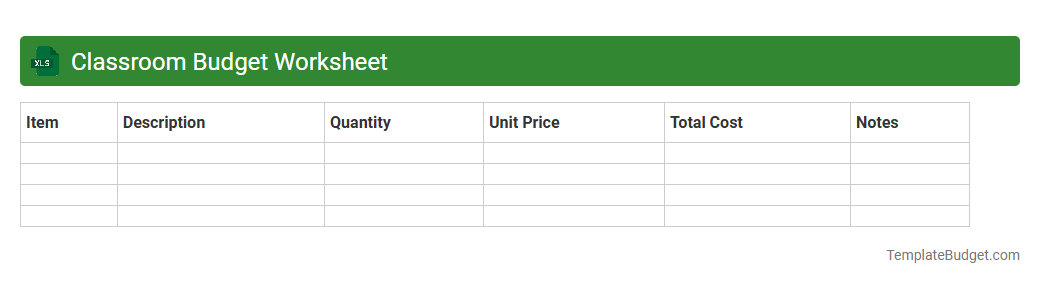
A Classroom Budget Worksheet in an Excel document typically contains categories such as supplies, equipment, and field trip expenses, with columns for estimated costs, actual spending, and remaining budget. It often includes formulas to automatically calculate totals and balances, helping educators manage funds effectively. Detailed item descriptions and dates may also be present to track purchasing timelines and ensure alignment with budget constraints.
Introduction to School Budget Worksheets
A School Budget Worksheet is a vital tool that helps educational institutions plan and manage their financial resources efficiently. It provides a structured framework for tracking income and expenses throughout the academic year. Using this worksheet ensures financial transparency and accountability in school operations.
Importance of Budgeting in Schools
Effective budgeting is essential for schools to allocate resources properly and achieve their educational goals. Budgeting helps prevent overspending and allows schools to prioritize essential programs and services. It also enables better decision-making and long-term financial stability.
Key Components of a School Budget Worksheet
Core components include projected revenues, fixed and variable costs, and contingency funds. A comprehensive budget worksheet covers salaries, supplies, maintenance, and other operational expenses. These elements provide a clear financial roadmap for school administrators.
Steps to Create an Effective Budget Worksheet
Begin by gathering all financial data and reviewing previous budgets. Next, estimate income and categorize expenses accurately to create a balanced budget worksheet. Finally, involve key staff for review and approval to ensure alignment with school priorities.
Common Budget Categories in Schools
Typical categories include personnel costs, instructional materials, utilities, and transportation. Each category must be clearly defined and allocated sufficient funds in the budget worksheet. This clarity helps in monitoring expenditures and identifying areas for savings.
Tips for Accurate Budget Forecasting
Use historical data and current trends to make realistic projections. Incorporate potential changes in enrollment or funding to improve the accuracy of your budget forecast. Regularly update assumptions to reflect any financial shifts during the year.
Tools and Templates for School Budget Worksheets
Utilize readily available digital tools and customizable templates designed for school budgeting. These resources simplify the creation and maintenance of accurate financial plans. Many templates allow easy adjustments and automatic calculations to reduce errors.
Addressing Budget Shortfalls and Adjustments
When facing a shortfall, identify non-essential expenses to cut or defer. Adjust the budget worksheet to reflect realistic income and expenditures, maintaining core educational services. Proactive management and transparent communication are key to resolving deficits effectively.
Engaging Stakeholders in the Budget Process
Involve teachers, parents, and administrators in budget planning to gain diverse perspectives. Stakeholder engagement in the budget process promotes transparency and buy-in for financial decisions. Collaborative discussions help align budget priorities with community needs.
Reviewing and Updating the School Budget Worksheet
Regular reviews ensure the budget worksheet remains aligned with actual financial performance. Update forecasts and expenditures quarterly to respond to changes in funding or costs. Continuous monitoring supports informed decision-making and fiscal responsibility.
More School Excel Templates