A School District Budget Template is essential for managing financial resources, tracking expenditures, and planning future allocations effectively. It helps district administrators maintain transparency, ensure compliance with education funding regulations, and optimize resource distribution across schools. Explore the Excel template below to simplify your school district's budgeting process.
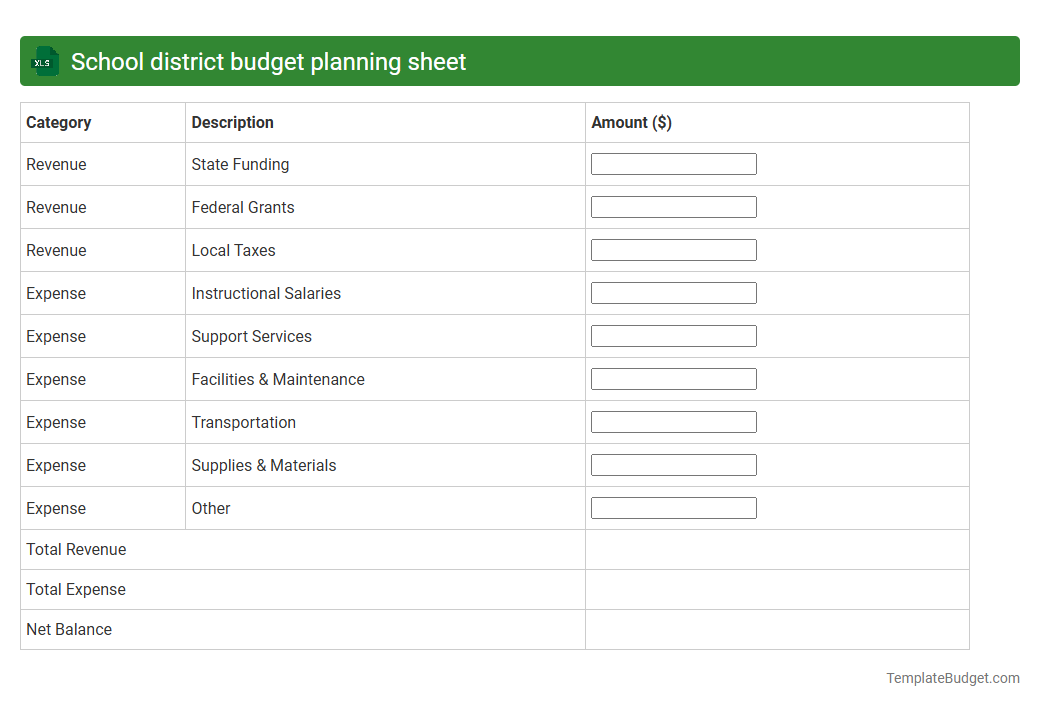
School district budget planning sheet
An Excel school district budget planning sheet typically includes detailed categories such as revenue sources, including federal, state, and local funding, and expenditure classifications like salaries, benefits, supplies, and capital projects. It features line items for each expense type, projected amounts, actual spending, and variances to track financial performance and ensure compliance with budgetary constraints. Built-in formulas and pivot tables help analyze trends, forecast future budgets, and support transparent financial reporting.
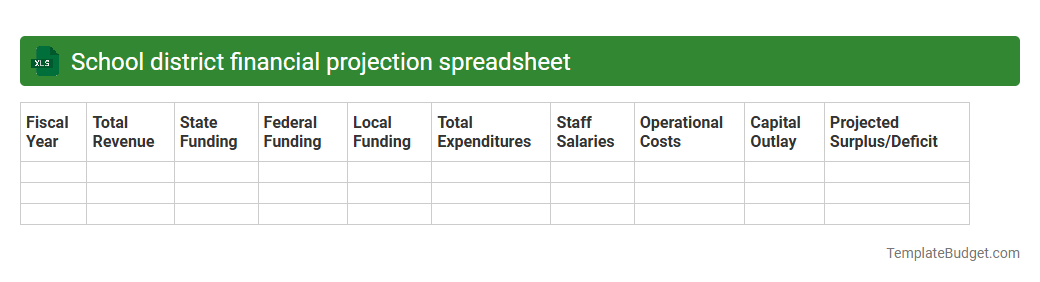
School district financial projection spreadsheet
A school district financial projection spreadsheet typically contains detailed revenue forecasts, including local, state, and federal funding sources, alongside expenditure estimates such as salaries, benefits, and operational costs. It often features multi-year budget scenarios, enrollment projections, and capital improvement plans to help district leaders make informed financial decisions. Key financial metrics like fund balances, cash flow analysis, and variance reports are commonly included to ensure fiscal responsibility and strategic planning.
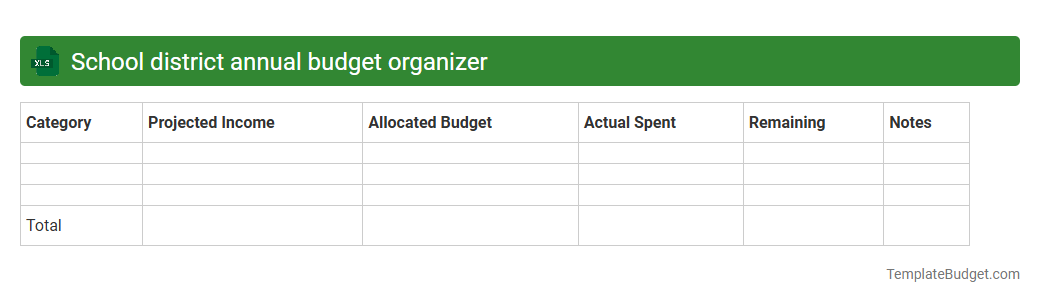
School district annual budget organizer
An Excel document designed as a school district annual budget organizer typically contains detailed worksheets for revenue sources, including federal, state, and local funding allocations. It includes expense categories such as salaries, facilities maintenance, instructional materials, and transportation costs, often broken down by department or school. Built-in formulas and charts help track budget versus actual spending, enabling effective financial planning and resource management throughout the fiscal year.
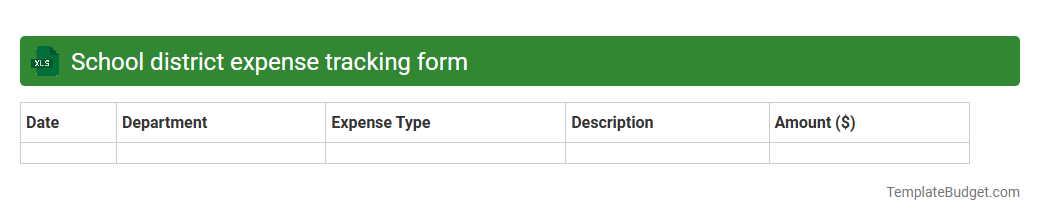
School district expense tracking form
An Excel document for school district expense tracking typically includes detailed categories such as personnel salaries, facility maintenance, transportation costs, and instructional materials. It contains columns for budgeted amounts, actual expenditures, dates, and vendor information to ensure accurate financial monitoring. This structured format helps school administrators analyze spending patterns, maintain compliance, and optimize resource allocation efficiently.
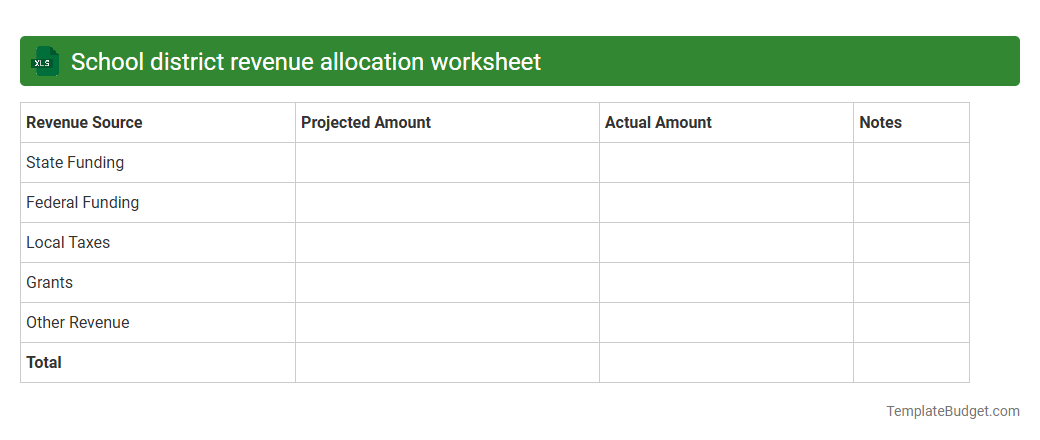
School district revenue allocation worksheet
A School District Revenue Allocation worksheet in Excel typically contains detailed breakdowns of funding sources such as federal, state, and local revenues. It includes categorized expense rows covering instructional costs, administrative expenses, facility maintenance, and transportation services. The worksheet often features columns for budgeted amounts, actual expenditures, variance analysis, and percentage allocations to track and optimize fiscal resource distribution.
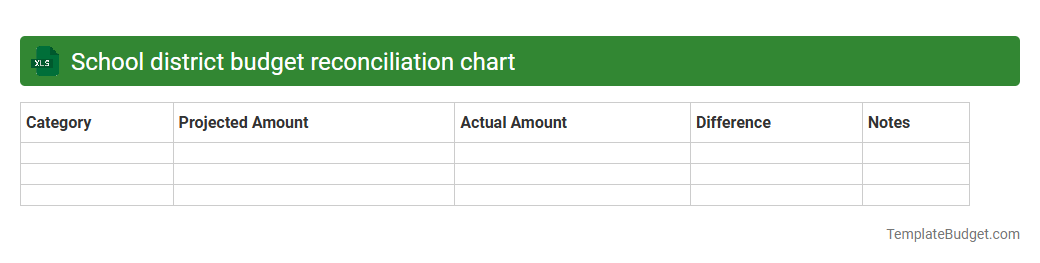
School district budget reconciliation chart
An Excel document containing a school district budget reconciliation chart typically includes detailed line items for revenues and expenditures, categorized by departments or funding sources. It features columns for original budget, actual spending, variances, and adjustments to track financial performance accurately. Data visualization elements like pivot tables or charts are often embedded to highlight discrepancies and support decision-making.
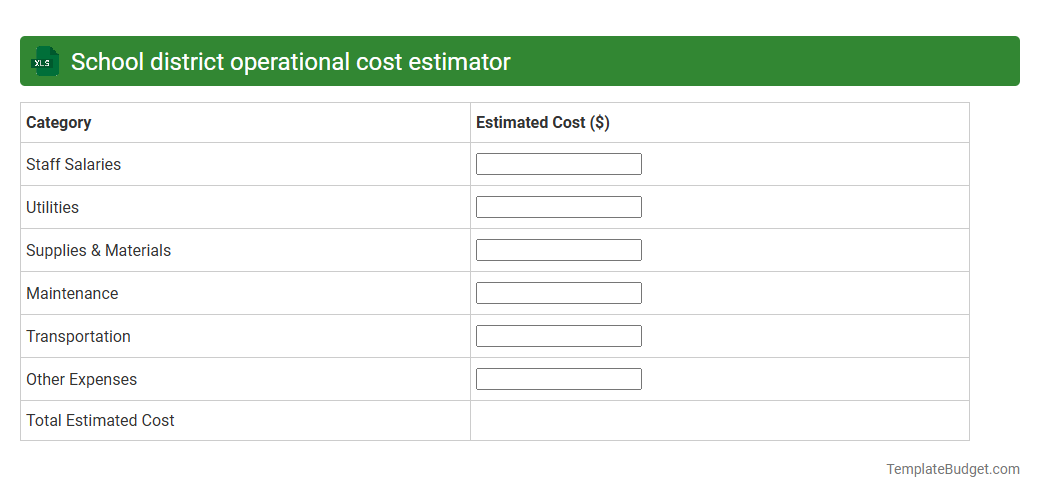
School district operational cost estimator
An Excel document titled "School District Operational Cost Estimator" typically contains detailed spreadsheets with categorized expenses such as salaries, utilities, transportation, and maintenance costs. It includes input fields for enrollment numbers, staff counts, and resource usage metrics to generate accurate budget forecasts. Charts and formulas are commonly used to analyze cost trends and facilitate financial planning for school district administrators.
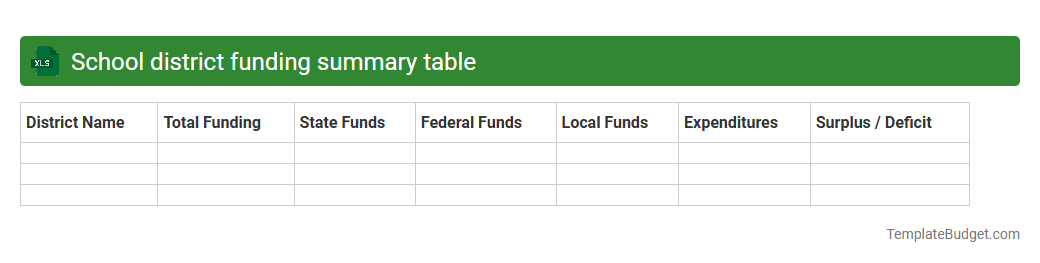
School district funding summary table
An Excel document containing a school district funding summary table typically includes detailed financial data such as allocated budgets, expenditure categories, revenue sources, and funding amounts for various programs or departments. The table may present data by fiscal year, funding type (state, federal, local), and specific schools within the district to facilitate comparison and trend analysis. Key metrics like per-student funding, grant awards, and expenditure percentages help stakeholders assess financial efficiency and resource distribution.
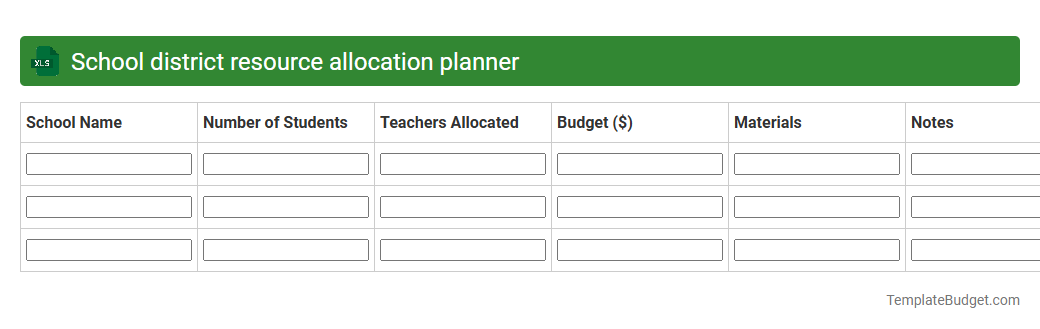
School district resource allocation planner
An Excel document titled "School District Resource Allocation Planner" typically contains worksheets with detailed budget breakdowns, funding sources, and expenditure forecasts for various schools within the district. It includes data tables for staff salaries, classroom materials, facility maintenance costs, and transportation expenses, often enhanced with pivot tables and charts for visual analysis. Formulas and conditional formatting are used to track resource utilization and identify areas requiring adjustments to optimize financial management and ensure equitable distribution of funds.
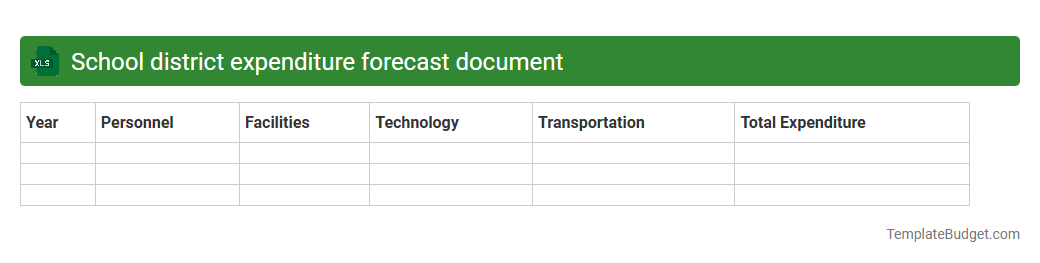
School district expenditure forecast document
A school district expenditure forecast Excel document typically contains detailed budget categories such as salaries, benefits, supplies, and capital expenses, organized by fiscal years for trend analysis. It includes forecasted revenue sources like state funding, local taxes, and grants, allowing for comparison against projected expenditures to identify budget gaps or surpluses. Key financial metrics, charts, and pivot tables enhance data visualization and support strategic decision-making for resource allocation and financial planning.
Introduction to School District Budget Templates
A school district budget template serves as a structured framework to plan and allocate funds efficiently. It simplifies complex financial data, enabling administrators to oversee expenses and revenues effectively. Using a template ensures consistency in budget preparation across school districts.
Importance of Budget Planning in School Districts
Budget planning is crucial for managing limited resources and meeting educational goals. A well-planned budget aligns spending with priorities, avoiding unnecessary deficits. Effective budget planning supports transparency and accountability in school district finance.
Key Components of a School District Budget Template
Essential components include revenue sources, expenditure categories, and reserve funds. These elements help track funding from local, state, and federal sources. A comprehensive budget template also details salaries, operations, and instructional costs.
Steps to Create an Effective Budget Template
Begin by outlining goals and estimating revenues. Include detailed expense categories next, followed by monitoring and adjusting allocations. Creating a clear budget template involves collaboration among stakeholders for accuracy and feasibility.
Common Budget Categories for School Districts
Typical categories cover personnel salaries, instructional materials, transportation, and facility maintenance. Each category reflects essential spending areas crucial to daily operations. Prioritizing these budget categories enables focused resource distribution.
Best Practices for School Budget Management
Regular review and adjustment of budgets ensure funds are used effectively throughout the year. Engaging stakeholders in the budgeting process promotes transparency and trust. Strong budget management includes forecasting and contingency planning for unforeseen expenses.
Tools and Software for Budget Template Creation
Utilizing specialized software streamlines budget creation and reporting processes. Tools often feature customizable templates tailored for educational finance. Incorporating budget software improves accuracy and facilitates data analysis.
Tips for Ensuring Budget Alignment with District Goals
Regularly review district priorities to ensure financial plans support strategic objectives. Aligning expenditures with goals fosters efficient use of funds and measurable outcomes. Strong budget alignment requires clear communication and consistent evaluation.
Examples of School District Budget Templates
Sample templates often include line-item details for revenues and expenditures. Reviewing examples aids districts in customizing templates to fit local needs. Using budget examples provides practical guidance for accurate financial planning.
Frequently Asked Questions About School Budget Templates
Common questions focus on template customization, update frequency, and compliance requirements. Answers help administrators navigate complex budgeting challenges. A reliable FAQ resource supports informed decision-making for budget preparation.
More School Excel Templates