Efficiently managing school finances requires precise tracking of expenses and revenues to ensure optimal resource allocation and financial transparency. A school budget tracking sheet plays a crucial role in monitoring funding sources, operational costs, and project expenditures, helping administrators maintain fiscal responsibility throughout the academic year. Explore the Excel template below to simplify your school budget management process and keep your financial records organized.
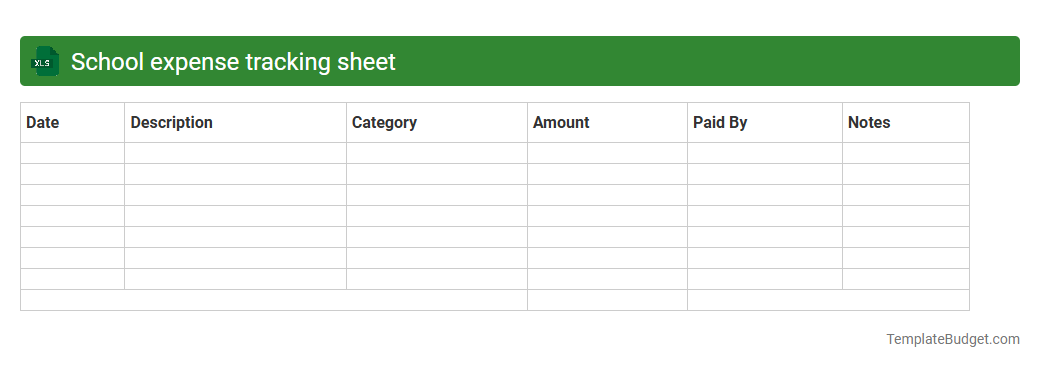
School expense tracking sheet
An Excel school expense tracking sheet typically contains columns for date, expense category (e.g., supplies, transportation, meals), description of the item or service, amount spent, and payment method. It may include formulas to calculate total expenses, monthly summaries, and remaining budget to help manage school-related costs efficiently. Charts or graphs can be integrated to visualize spending patterns and identify areas for potential savings.
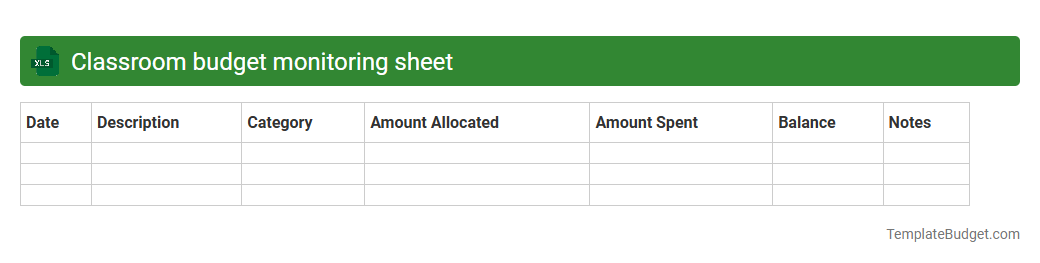
Classroom budget monitoring sheet
An Excel classroom budget monitoring sheet typically contains detailed columns for expense categories such as supplies, technology, and field trips, alongside budgeted amounts, actual expenditures, and remaining balances. It often includes rows for tracking individual items or vendors, date of purchase, and payment status to ensure transparent and organized financial management. Formulas for automatic calculation of totals and variances help educators maintain control over classroom finances efficiently.
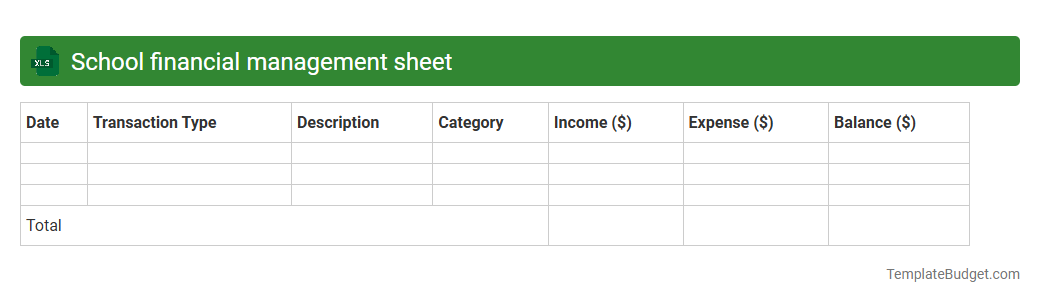
School financial management sheet
A school financial management sheet typically contains detailed records of income sources such as tuition fees, grants, and donations, alongside expense categories including salaries, maintenance, supplies, and utilities. It includes budget forecasts, actual expenditure tracking, and variance analysis to monitor financial performance and ensure accountability. Key elements often feature balance sheets, cash flow statements, and charts for visualizing financial trends over academic periods.
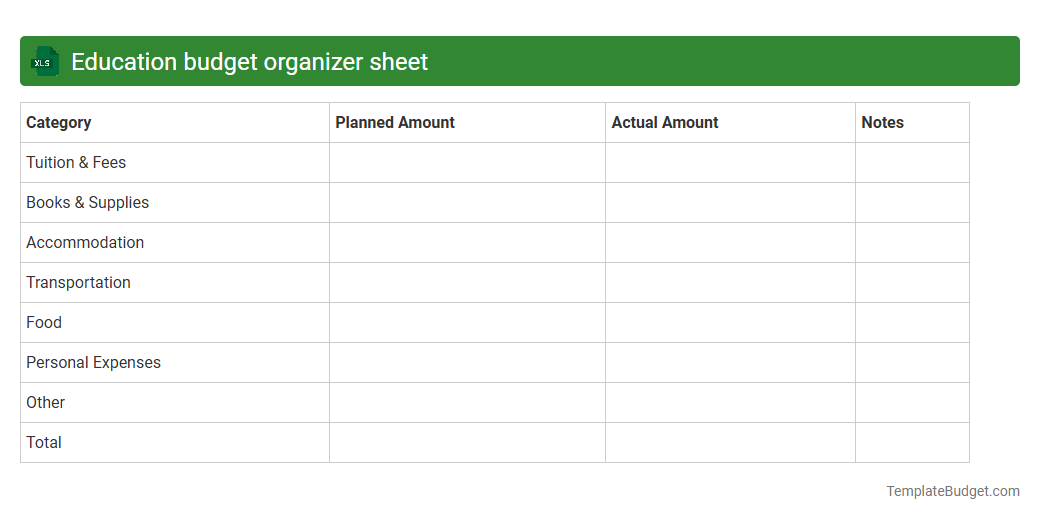
Education budget organizer sheet
An Education Budget Organizer sheet in Excel typically includes categorized expense fields such as tuition fees, textbooks, supplies, transportation, and extracurricular activities, allowing detailed financial tracking. It features columns for planned budget, actual spending, and variance to monitor discrepancies and manage funds efficiently. Summary sections often contain total expenses, remaining budget, and graphical representations like pie charts or bar graphs for quick visualization of budget allocation.
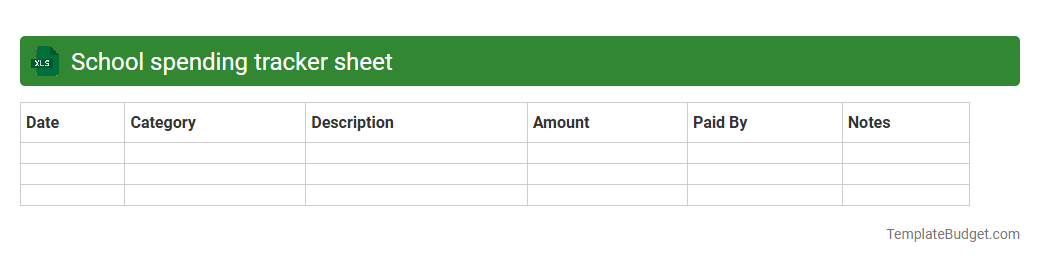
School spending tracker sheet
A school spending tracker Excel document typically contains detailed expense categories such as supplies, transportation, extracurricular activities, and facility maintenance. It includes columns for dates, amounts, payment methods, and vendor information to ensure comprehensive financial monitoring. Summary sections often feature monthly and annual totals with visual charts for budget analysis and forecasting.
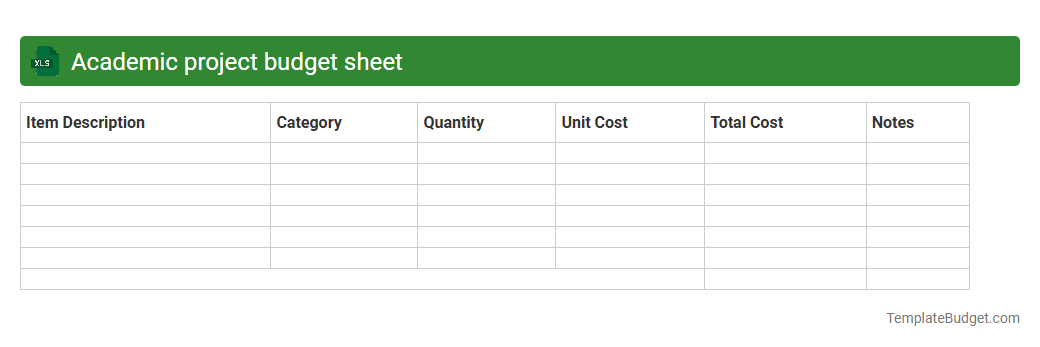
Academic project budget sheet
An academic project budget sheet in an Excel document typically contains detailed categories such as personnel costs, equipment expenses, materials, travel costs, and indirect costs. Each category is itemized with estimated quantities, unit costs, and total amounts to ensure accurate financial planning and resource allocation. Formulas are often embedded to automatically calculate subtotals, overall budget totals, and track expenditures against allocated funds.
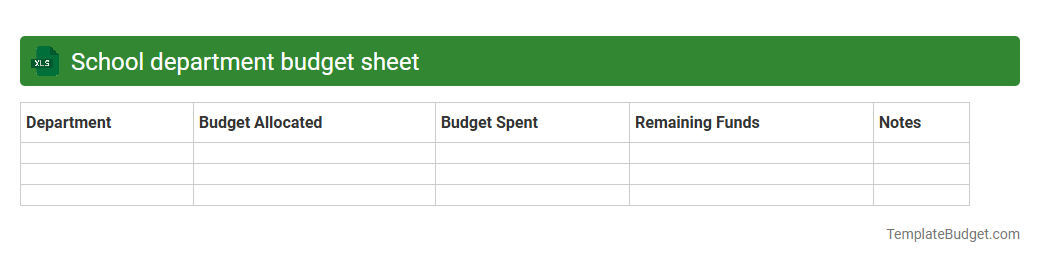
School department budget sheet
An Excel document for a school department budget sheet typically contains detailed categories such as personnel salaries, supplies, equipment costs, and operational expenses. It includes columns for planned budgets, actual expenditures, and variance analysis to track financial performance throughout the fiscal year. Key data points often feature funding sources, grant allocations, and anticipated future expenses to support effective budget management.
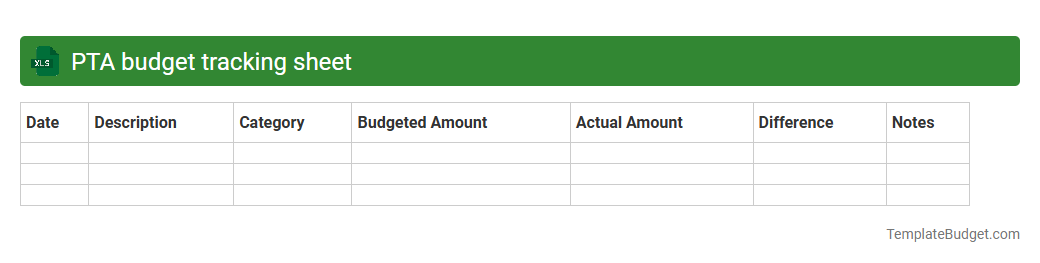
PTA budget tracking sheet
A PTA budget tracking sheet in Excel typically contains detailed categories such as income sources, expense types, budgeted amounts, actual expenditures, and variance calculations to monitor financial performance. It often includes columns for dates, transaction descriptions, payment methods, and running balances to ensure transparency and accountability. Built-in formulas and charts help visualize spending trends and keep the PTA's financial health organized and accessible.
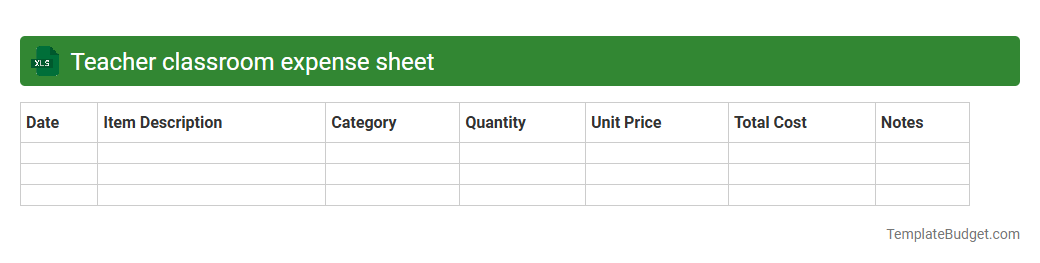
Teacher classroom expense sheet
A Teacher Classroom Expense Sheet in Excel typically includes columns for item description, purchase date, vendor name, quantity, unit price, and total cost, allowing educators to track and manage classroom spending efficiently. It often contains categories such as supplies, books, educational software, and materials for student activities, helping to organize expenses for budget reporting or reimbursement purposes. Formulas for automatic calculation of totals and summaries ensure accurate financial tracking and easy analysis of monthly or yearly expenditures.
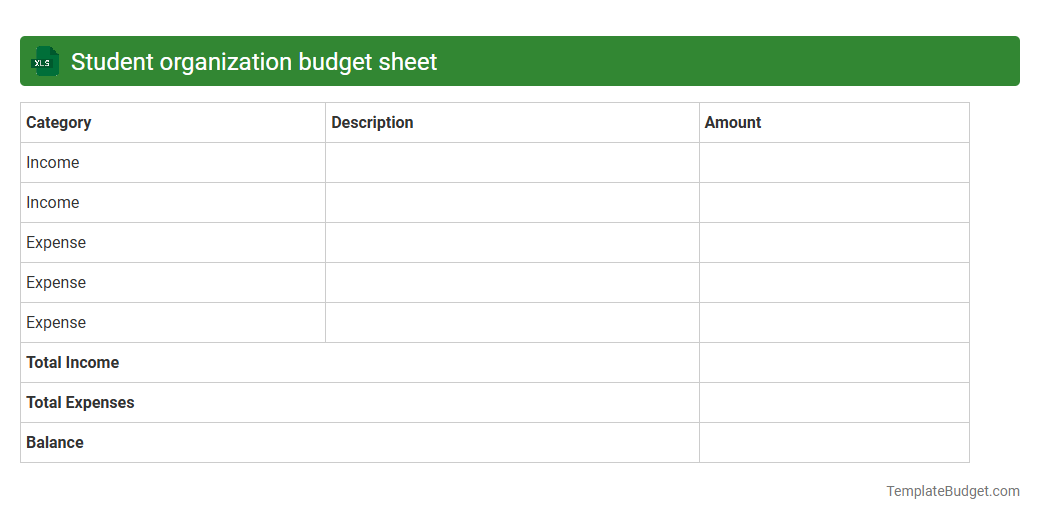
Student organization budget sheet
A student organization budget sheet in an Excel document typically includes categories such as income sources, expense items, allocated amounts, and actual expenditures. It features detailed rows for membership dues, fundraising revenue, event costs, supplies, and miscellaneous expenses, often accompanied by date and description columns. Formulas are used to calculate totals, remaining balances, and variances to ensure accurate financial tracking and planning.
Introduction to School Budget Tracking Sheets
A School Budget Tracking Sheet is a vital tool designed to monitor and control school finances efficiently. It helps administrators keep track of income, expenses, and allocation of resources. This sheet ensures financial data is organized for better decision-making.
Importance of Budget Management in Schools
Effective budget management is crucial to ensure resources are utilized wisely and educational goals are met. It promotes accountability and prevents financial mismanagement. Strong budget controls safeguard the school's financial health and support sustainable growth.
Key Features of an Effective Budget Tracking Sheet
An ideal budget tracking sheet includes clear categories, real-time expense tracking, and comparison against planned budgets. It offers flexibility to accommodate different funding sources and detailed financial summaries. Automation features enhance accuracy and reduce manual errors.
Essential Categories in a School Budget Sheet
The most common categories include salaries, supplies, maintenance, extracurricular activities, and capital expenditures. Proper categorization ensures all costs are monitored and aligned with school priorities. Including a contingency fund category helps manage unexpected expenses.
Setting Up Your School Budget Tracking Sheet
Begin by listing all income sources and categorizing anticipated expenses to create a comprehensive budget. Use spreadsheet software to build a customizable and easy-to-update tracking sheet. Make sure to incorporate formulas for automatic calculations of totals and variances.
Tips for Accurate Financial Record Keeping
Maintain regular updates and cross-check all entries to ensure accuracy. Keep receipts and documentation for every transaction to support budgeting decisions. Consistent record-keeping reduces errors and facilitates smooth audits.
Common Mistakes in School Budget Tracking
Failing to update records promptly and ignoring small expenses can lead to budget overruns. Overestimating income or underestimating expenditures distorts financial planning. Lack of staff training on budget sheet usage often results in data inconsistencies.
Tools and Templates for Budget Tracking
Utilize professionally designed templates that cater specifically to school budgeting needs. Tools like Excel, Google Sheets, and specialized software streamline tracking and reporting processes. Many templates come preloaded with formulas and graphs to visualize finances clearly.
Analyzing and Reporting School Budget Data
Regular data analysis identifies spending trends, potential savings, and funding gaps. Use reports to communicate financial status with stakeholders clearly and transparently. Visual aids like charts and graphs enhance understanding and facilitate strategic planning.
Best Practices for Maintaining Budget Transparency
Ensure that budget information is accessible to staff, board members, and relevant stakeholders. Conduct periodic reviews and openly discuss financial reports to build trust and accountability. Transparency fosters a collaborative approach to financial management and resource allocation.
More School Excel Templates