An Event Budget Sheet is essential for organizing and tracking all financial aspects of your event, ensuring expenses stay within limits and resources are allocated efficiently. It helps identify key cost categories such as venue, catering, marketing, and equipment, enabling clearer financial planning and real-time budgeting adjustments. Explore the Excel template below to simplify your event budgeting process and achieve successful financial management.
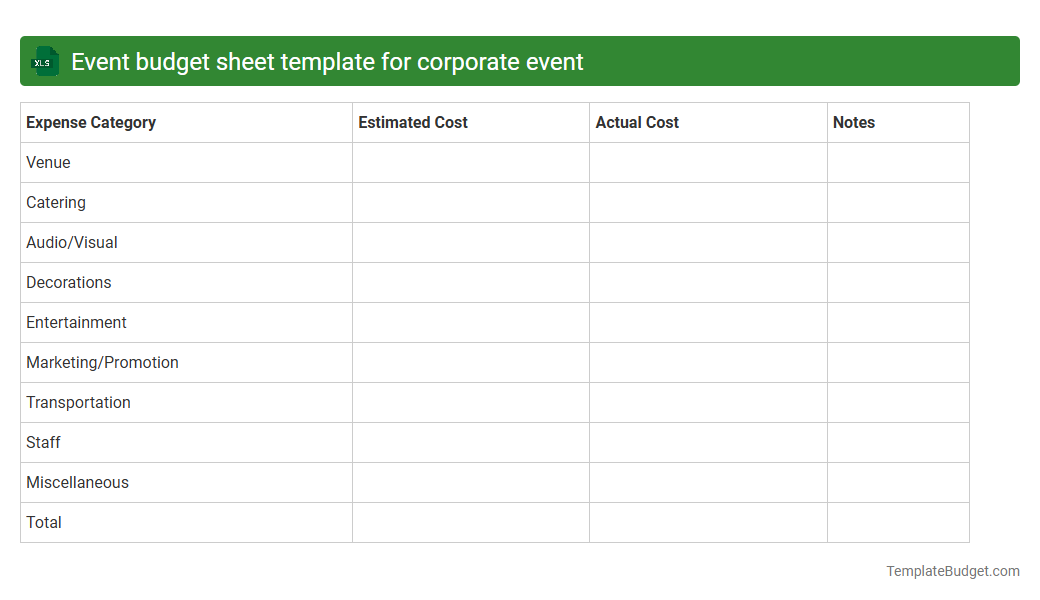
Event budget sheet template for corporate event
An Event Budget Sheet Template for corporate events typically includes categories such as venue costs, catering expenses, audio-visual equipment rental, marketing and promotional activities, and staff wages. It features detailed line items for individual expense tracking, budget allocation, actual spending, and variance analysis to ensure financial control. The template also incorporates formulas for automatic calculations, enabling event planners to monitor costs and stay within the designated budget effectively.
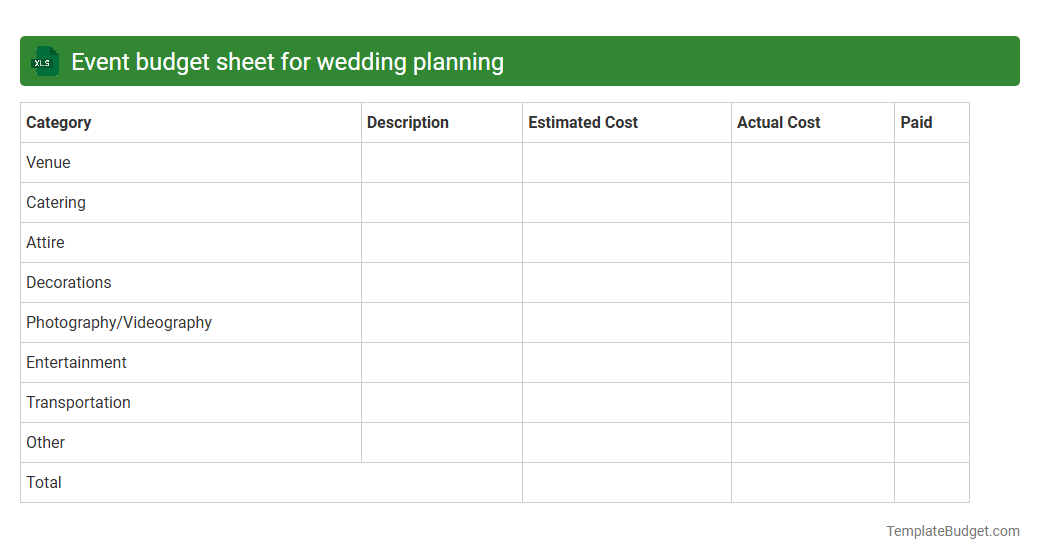
Event budget sheet for wedding planning
An event budget sheet for wedding planning typically contains detailed categories such as venue costs, catering fees, decoration expenses, and entertainment charges. It includes columns for estimated costs, actual expenditures, payment deadlines, and vendor contact information to ensure accurate tracking. This structured format helps organize financial details efficiently, enabling effective budget management and contingency planning.
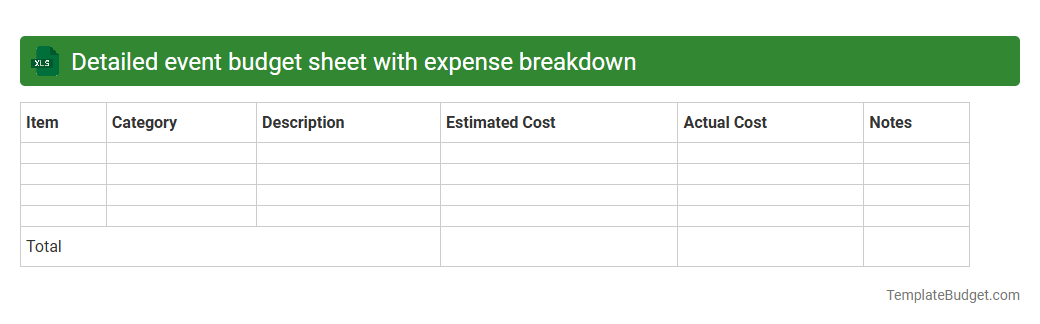
Detailed event budget sheet with expense breakdown
An Excel document containing a detailed event budget sheet typically includes categorized expense breakdowns such as venue costs, catering fees, equipment rentals, marketing expenses, and staff wages. It features columns for estimated costs, actual expenditures, payment dates, and vendor details to facilitate transparent tracking and financial reconciliation. Formulas and pivot tables are often incorporated to dynamically calculate totals, variances, and budget performance metrics.
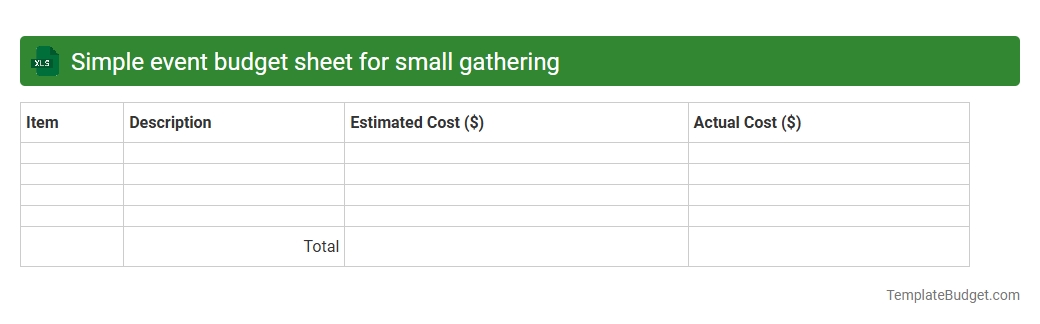
Simple event budget sheet for small gathering
An Excel document for a simple event budget sheet typically contains columns for item description, estimated cost, actual cost, and payment status to track expenses efficiently. It includes categories such as venue, catering, decorations, entertainment, and miscellaneous costs to ensure comprehensive budget management. Formulas for summing totals and calculating variances help monitor spending and maintain financial control throughout the event planning process.
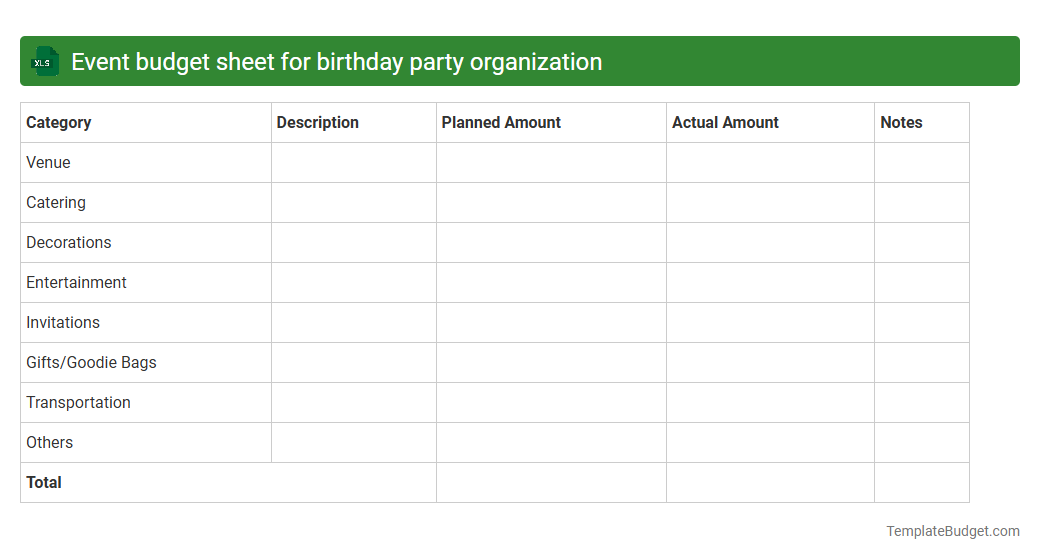
Event budget sheet for birthday party organization
An Excel document for an event budget sheet typically contains categorized expense columns such as venue rental, catering, decorations, and entertainment costs, along with estimated and actual amounts. It includes formulas to calculate total expenses, track budget variances, and manage payment schedules to ensure financial control. The sheet often features sections for vendor contacts, notes, and a summary dashboard to provide a clear overview of the birthday party's financial planning.
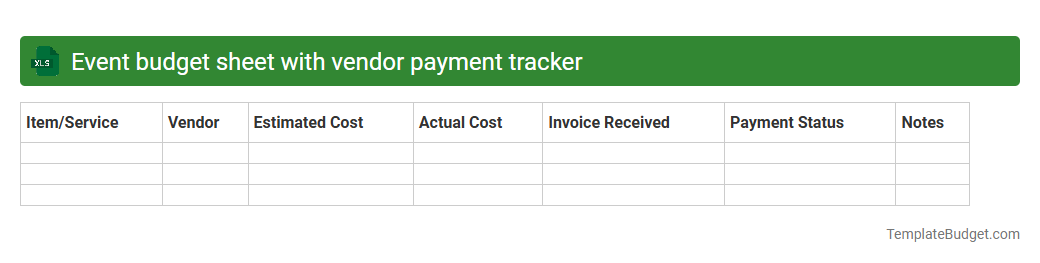
Event budget sheet with vendor payment tracker
An Excel document containing an event budget sheet with a vendor payment tracker typically includes detailed cost categories such as venue rental, catering, entertainment, and marketing expenses. It features columns for vendor names, invoice numbers, payment due dates, amounts billed, amounts paid, and outstanding balances to monitor cash flow and ensure timely payments. This structured format facilitates accurate financial tracking, budget adherence, and efficient vendor management throughout the event planning process.
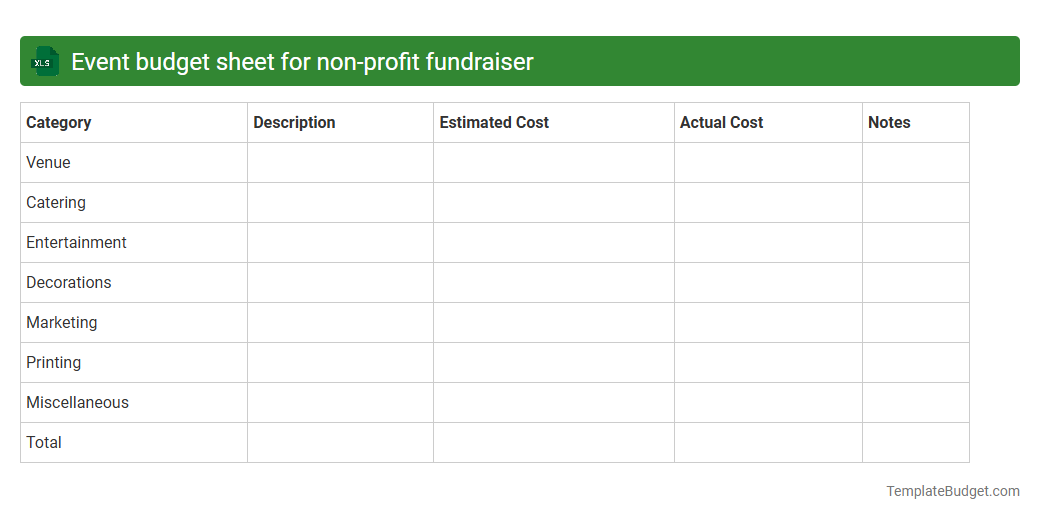
Event budget sheet for non-profit fundraiser
An Excel document for an event budget sheet used in a non-profit fundraiser typically contains categorized expense and income sections, including venue costs, catering, marketing, donations, and sponsorships. It features formulas to calculate totals, track actual versus projected expenses, and monitor budget variances, ensuring precise financial oversight. Detailed rows capture itemized costs and revenue sources, while summary tables and charts provide a clear financial snapshot for stakeholders.
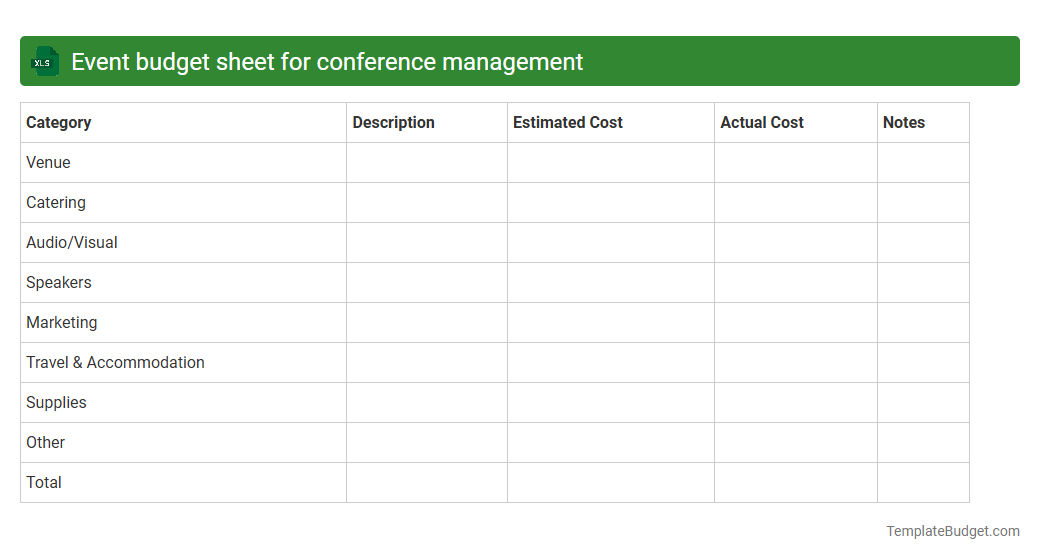
Event budget sheet for conference management
An event budget sheet for conference management typically includes detailed categories such as venue costs, catering expenses, speaker fees, marketing budgets, and equipment rentals. It tracks estimated versus actual expenses, financial allocations for different sessions, and income sources like sponsorships and ticket sales. The sheet often features formulas to calculate totals, variances, and contingency funds to ensure comprehensive financial oversight.
Event budget sheet for school function coordination
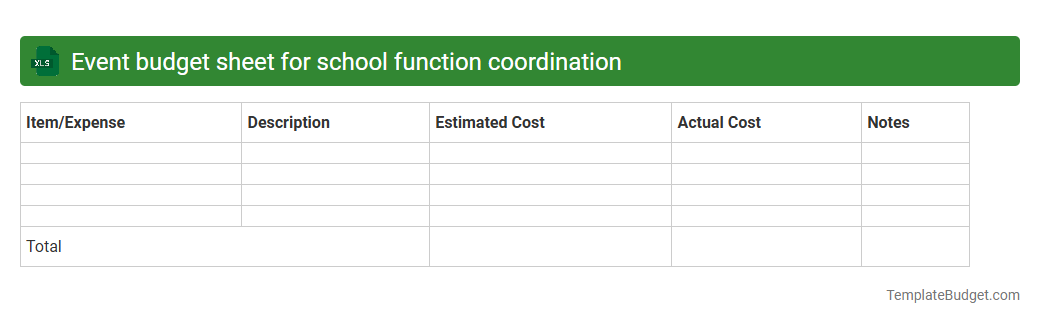
An Excel document for event budget sheet in school function coordination typically contains categories such as venue expenses, catering costs, decoration fees, and equipment rentals. It includes detailed columns for estimated costs, actual expenses, payment status, and vendor information to ensure accurate tracking and financial control. The sheet may also feature summary tables and charts to visualize total budget allocation and spending trends.
Event budget sheet with actual vs projected spend
An Excel document titled "Event Budget Sheet with Actual vs Projected Spend" typically includes detailed categories such as venue costs, catering expenses, marketing fees, and staffing wages. It features columns for projected budgets alongside actual expenditures, enabling clear comparison and variance analysis. Formulas calculate totals and differences, helping organizers track overspending or savings in real-time.
Introduction to Event Budget Sheets
An Event Budget Sheet is a crucial document that outlines all financial aspects of your event. It helps planners allocate resources, monitor expenses, and ensure the event stays within budget. This sheet serves as a financial roadmap providing clarity and control over event spending.
Importance of Budgeting for Events
Budgeting is vital to prevent overspending and maximize the use of available funds. A well-planned budget minimizes financial risks and promotes transparency throughout the event planning process. It ultimately contributes to a successful and sustainable event.
Key Components of an Event Budget Sheet
Essential components include sources of revenue, categorized expenses, and projected versus actual costs. Including detailed line items for each aspect ensures thorough financial management. A comprehensive budget sheet helps track every dollar involved in the event.
Setting Event Financial Goals
Clearly defining financial goals aligns the budgeting process with the event's overall objectives. Goals might include profit targets, cost limits, or fundraising benchmarks. Setting financial goals early ensures focused and strategic budget planning.
Categorizing Event Expenses
Organizing expenses into categories such as venue, marketing, catering, and staff facilitates easier tracking and analysis. Proper categorization provides a clear picture of where funds are allocated. Managing event expenses by category improves budget accuracy and control.
Estimating Revenue Sources
Anticipating income streams such as ticket sales, sponsorships, and merchandise is key to establishing a solid budget. Accurate revenue estimates allow planners to balance costs and expected earnings effectively. Identifying all potential revenue sources strengthens financial planning.
Tracking Actual vs. Projected Costs
Regularly comparing actual expenditures against projections helps identify budget deviations early. This practice enables timely adjustments and better financial decision-making. Maintaining accurate cost tracking is essential for successful event management.
Useful Tools and Templates for Event Budgets
Utilizing professional templates and software simplifies the budgeting process and enhances accuracy. Tools like spreadsheets and budgeting apps provide structured formats and real-time updates. Employing budget templates saves time and reduces errors in event finance management.
Common Budgeting Mistakes to Avoid
Common pitfalls include underestimating costs, ignoring contingency funds, and failing to update the budget regularly. Such mistakes can lead to overspending and financial surprises. Avoiding these errors is critical for effective budget control.
Tips for Effective Event Budget Management
Maintain transparent communication with stakeholders, update the budget frequently, and prioritize expenses based on goals. Monitoring cash flow and keeping a contingency reserve are also best practices. Following these budget management tips ensures your event stays financially on track.
More Event Excel Templates