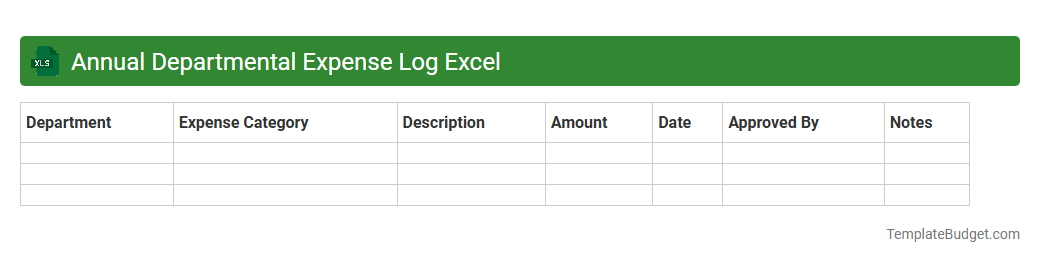
Tracking and managing departmental expenses efficiently is crucial for maintaining a balanced budget and ensuring financial transparency within an organization. A well-structured Departmental Expense Excel Template simplifies this process by organizing costs, categorizing spending, and providing clear insights into budget adherence. Explore the Excel template below to streamline your departmental expense management with ease.
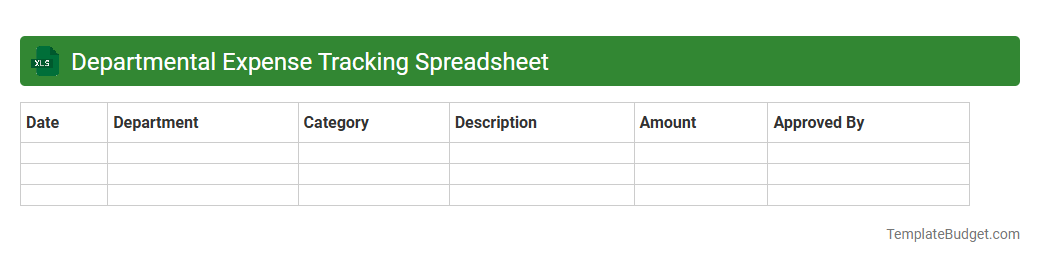
Departmental Expense Tracking Spreadsheet
A Departmental Expense Tracking Spreadsheet typically contains categorized expense entries, including dates, descriptions, amounts, and department codes to monitor spending accurately. It features columns for budget allocations, actual expenditures, and variance calculations to facilitate financial oversight and ensure budget compliance. Summary tables and charts are often included to visualize spending trends and support departmental financial decision-making.
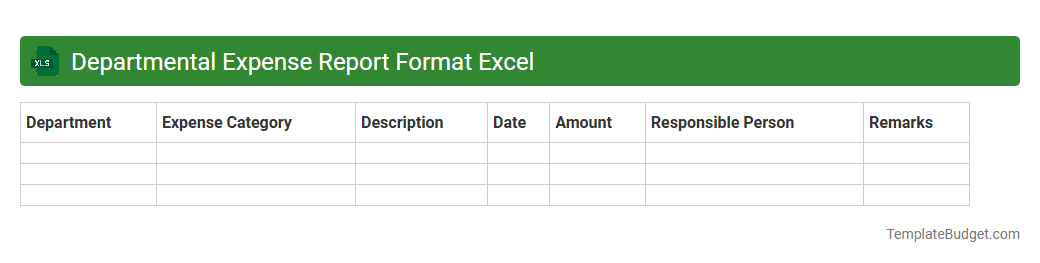
Departmental Expense Report Format Excel
An Excel Departmental Expense Report typically contains columns for Date, Expense Category, Description, Amount, and Department Name to track and categorize spending accurately. It often includes formulas to calculate total expenses per category and department, enabling efficient budget management and reconciliation. Visual elements like charts or pivot tables may be integrated for quick analysis of expense trends and departmental cost distribution.
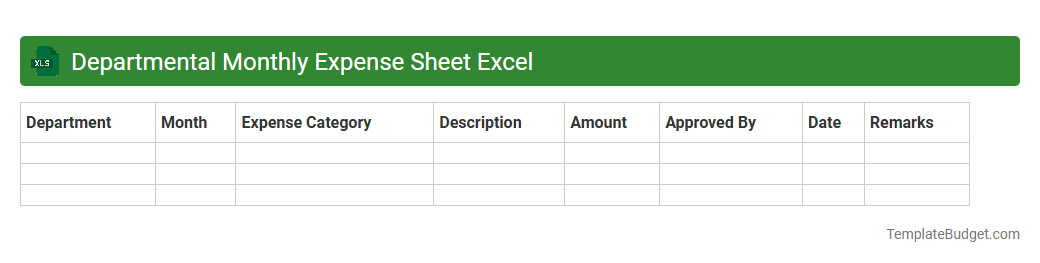
Departmental Monthly Expense Sheet Excel
An Excel Departmental Monthly Expense Sheet typically includes columns for expense categories such as salaries, utilities, office supplies, travel, and miscellaneous costs, along with rows representing each day or week of the month. It contains formulas to automatically calculate totals, subtotals, and variances against budgeted amounts, enhancing financial tracking accuracy. Pivot tables and charts are often embedded to provide visual summaries and facilitate easier departmental financial analysis.
Departmental Budget Management Excel Template
A Departmental Budget Management Excel Template typically contains categorized expense and revenue sections, detailed monthly budget versus actual comparisons, and summary dashboards with visual charts for financial analysis. It includes predefined formulas to calculate variances, track departmental spending trends, and forecast future budget needs accurately. Key data fields often cover salaries, operational costs, capital expenditures, and funding sources for comprehensive fiscal oversight.
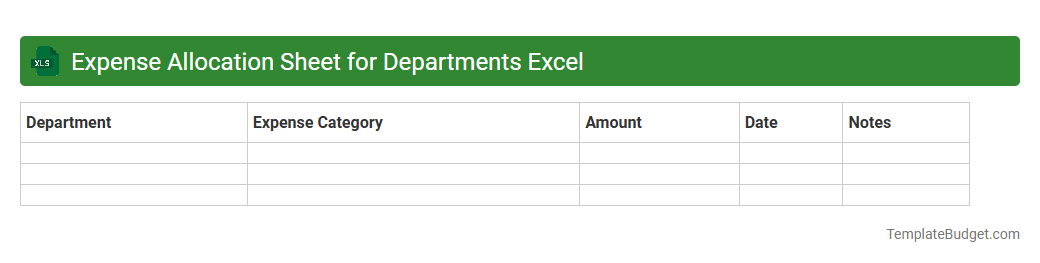
Expense Allocation Sheet for Departments Excel
An Expense Allocation Sheet for Departments Excel document typically contains detailed records of departmental expenses, categorized by cost centers and expense types to facilitate accurate budget tracking. It includes columns for date, description, amount, department codes, and allocation percentages to ensure each expense is properly assigned. Formulas and pivot tables are often integrated to automate calculations and generate summary reports for financial analysis and decision-making.
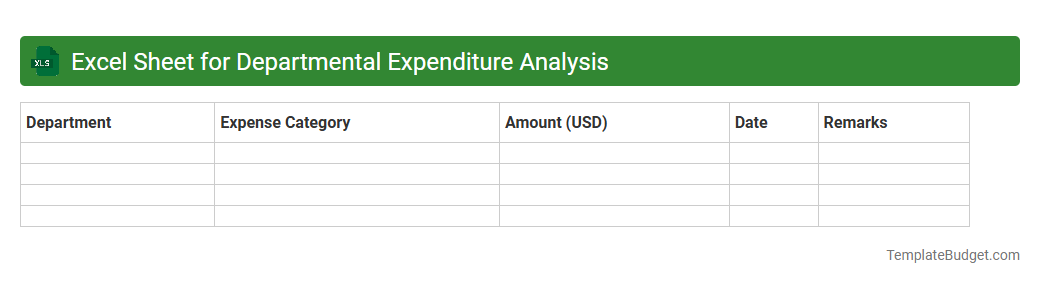
Excel Sheet for Departmental Expenditure Analysis
An Excel sheet for departmental expenditure analysis typically contains categorized financial data including budgeted amounts, actual spending, and variance calculations for each department. It features tables with rows representing specific expense categories and columns detailing monthly or quarterly expenditures, enabling trend identification and cost control. Charts and pivot tables might be included to visualize spending patterns and assist in strategic budgeting decisions.
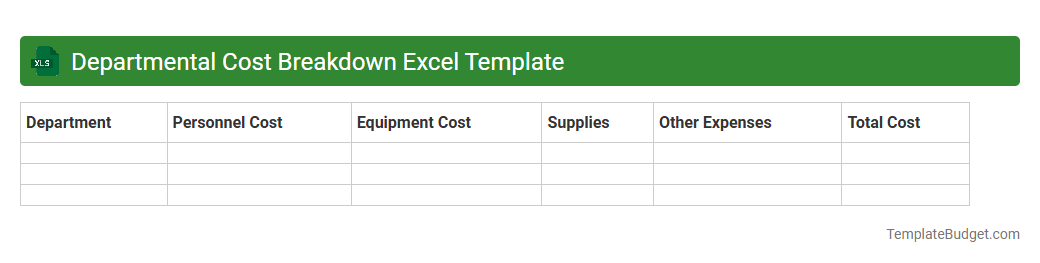
Departmental Cost Breakdown Excel Template
An Excel document titled "Departmental Cost Breakdown" typically contains categorized expense data from various business departments such as marketing, operations, human resources, and finance. It includes columns for expense types, budgeted amounts, actual costs, and variance analysis, enabling detailed cost tracking and financial performance assessment. This template often features formulas for automatic summation and percentage calculations, as well as charts for visual representation of departmental spending patterns.
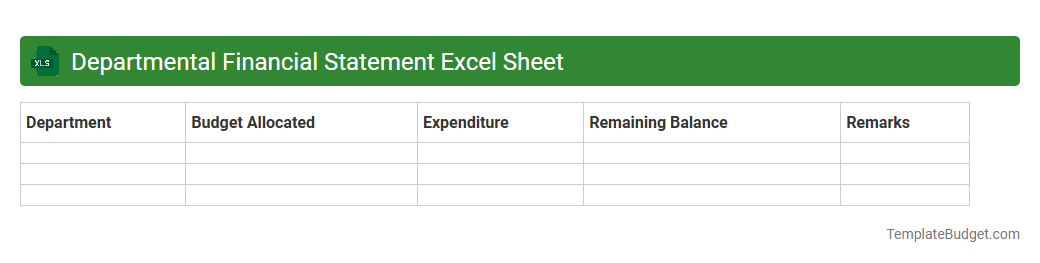
Departmental Financial Statement Excel Sheet
An Excel document titled "Departmental Financial Statement" typically contains detailed financial data organized into rows and columns, including revenue, expenses, budget allocations, and actual spending for various departments. It features formulas and functions that automatically calculate totals, variances, and percentage changes to provide clear financial insights. The sheet often includes charts or graphs to visualize departmental performance and support decision-making processes.
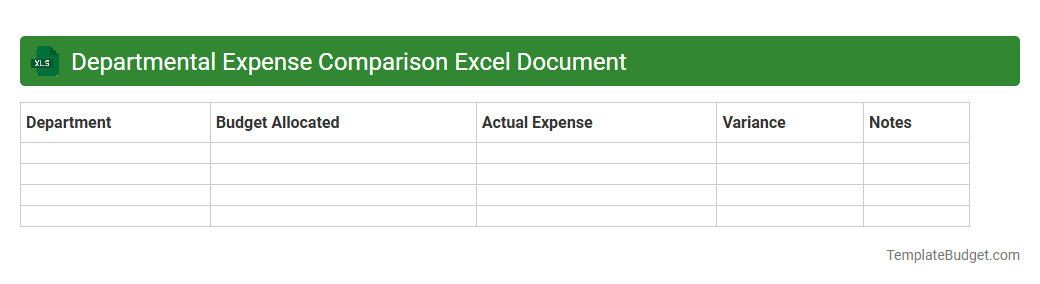
Departmental Expense Comparison Excel Document
An Excel document titled "Departmental Expense Comparison" typically contains detailed data sets organized into rows and columns, including departmental names, expense categories, monthly or quarterly spending figures, and budget allocations. Charts and pivot tables are often embedded to visually compare expenses across departments, highlight variances, and track spending trends over time. Formulas and conditional formatting may be used to calculate totals, percentages, and flag anomalies or budget overruns for efficient financial analysis.
Annual Departmental Expense Log Excel
An Annual Departmental Expense Log Excel typically contains detailed financial data organized by month, category, and department for accurate tracking of expenses throughout the year. It includes columns for expense dates, descriptions, vendor names, amounts, and budget comparisons to help identify spending patterns and budget variances. This spreadsheet often incorporates formulas for automatic calculations of totals, averages, and percentage variances, ensuring efficient and transparent departmental financial management.
Introduction to Departmental Expense Excel Templates
Departmental Expense Excel Templates provide a structured way to monitor and manage costs across various departments. These templates help organizations maintain clear financial oversight by consolidating expense data efficiently. They serve as a foundation for accurate budgeting and fiscal analysis.
Key Features of a Departmental Expense Template
Typical features include predefined expense categories, automatic calculations, and summary dashboards. These elements allow users to track spending trends and departmental budget adherence. The intuitive layout reduces data entry errors and simplifies review processes.
Benefits of Using Excel for Departmental Expenses
Excel offers flexible customization and powerful data analysis tools, making it ideal for expense management. It enhances real-time tracking and supports complex financial functions without additional cost. Accessibility and compatibility ensure smooth collaboration across teams.
Essential Columns in a Departmental Expense Spreadsheet
Important columns typically include Date, Department, Expense Category, Amount, and Notes. These columns enable clear categorization and detailed tracking of all transactions. Including a approval status column can improve expense validation processes.
How to Customize Your Departmental Expense Template
Customization involves adapting categories, adding specific columns, and adjusting formulas to fit organizational needs. Users can also integrate charts and pivot tables for enhanced data visualization. Tailoring the template ensures it meets unique operational requirements.
Steps to Set Up the Template in Excel
Begin by selecting a suitable departmental expense template, then input your departmental data and expense categories. Next, configure formulas for automatic totals and summaries. Finally, set permissions and backup protocols to ensure data security and integrity.
Best Practices for Managing Departmental Expenses
Regularly update expense entries, review spending patterns, and ensure timely reconciliations to maintain accurate records. Establish clear expense policies and train staff on template usage. Consistent management fosters financial transparency and accountability.
Automating Calculations and Summaries in Excel
Use Excel functions like SUMIFS, VLOOKUP, and PivotTables to automate expense calculations and generate summaries. Automation reduces manual errors and accelerates financial reporting. Visual aids such as charts help in quick interpretation of the data.
Common Mistakes to Avoid in Expense Tracking
Avoid inconsistent data entry, neglecting regular updates, and missing approval workflows. Overlooking data validation can cause discrepancies and complicate audits. Ensuring accuracy and completeness is crucial for reliable financial management.
Downloadable Departmental Expense Excel Template
Downloadable templates offer a ready-to-use solution with prebuilt functions and categories tailored for departmental expenses. These templates save setup time and serve as a reliable starting point for managing budgets. Accessing a comprehensive template can streamline your financial workflows immediately.
More Department Excel Templates