A Retirement Planning Spreadsheet is an essential tool to help organize your finances and set achievable savings goals for a secure future. By tracking income, expenses, investments, and projected retirement needs, this spreadsheet provides clarity and control over your financial journey. Explore the Excel template below to start planning your retirement with confidence and precision.
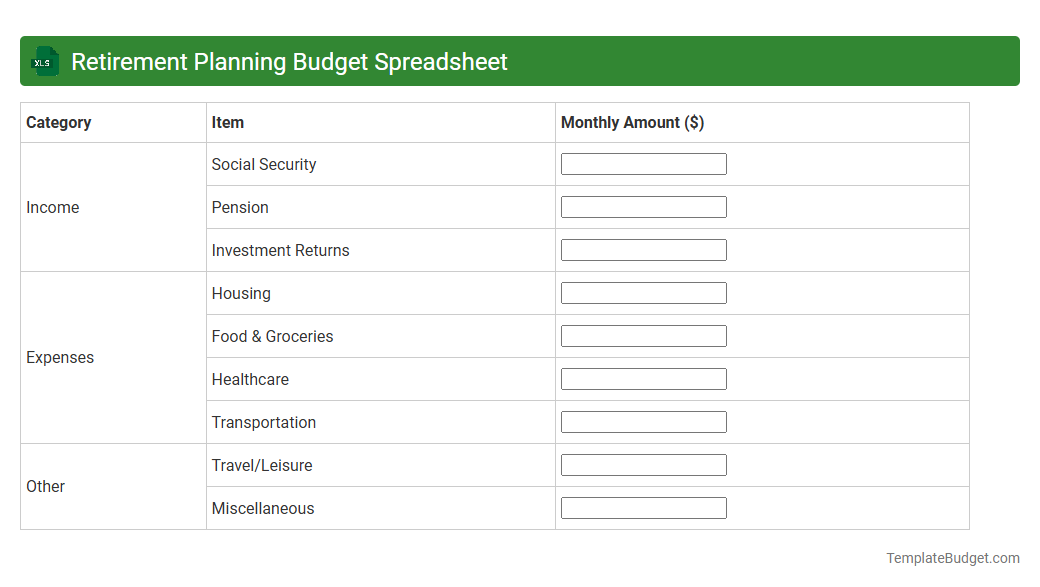
Retirement Planning Budget Spreadsheet
A Retirement Planning Budget Spreadsheet typically contains sections for estimating monthly income sources such as Social Security, pensions, and investment withdrawals. It includes detailed expense categories like housing, healthcare, transportation, and leisure activities to track anticipated costs during retirement. Financial projections often feature savings growth, inflation adjustments, and withdrawal rates to ensure sustainable retirement funding.
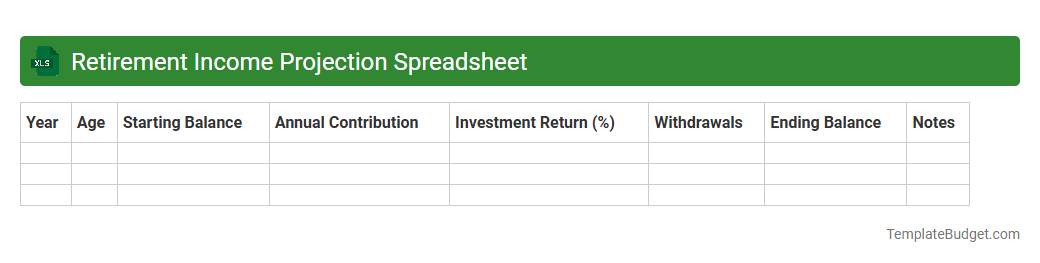
Retirement Income Projection Spreadsheet
A Retirement Income Projection Spreadsheet typically contains detailed data on expected income sources such as Social Security benefits, pensions, savings, and investments, along with estimated withdrawal rates and inflation assumptions. It often includes age-based income timelines, expense forecasts, tax implications, and scenario analyses to assess financial sustainability during retirement years. Interactive charts and summary tables help visualize cash flow projections and overall net worth evolution over time.
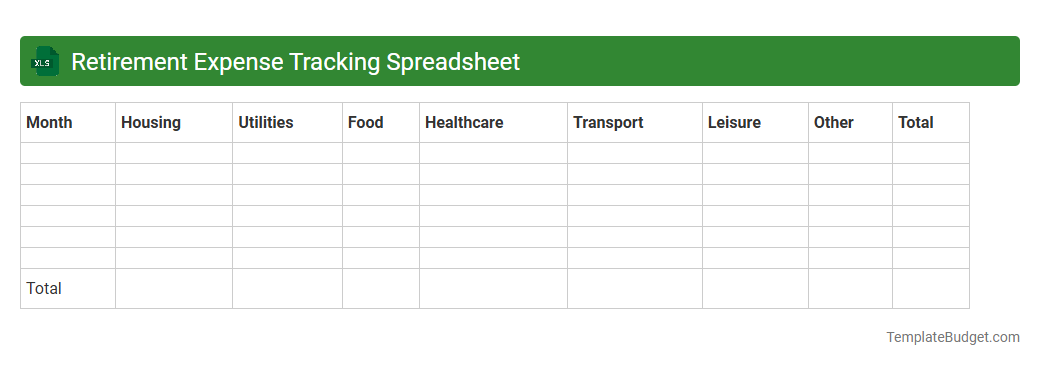
Retirement Expense Tracking Spreadsheet
A Retirement Expense Tracking Spreadsheet typically contains categorized expense fields such as housing, healthcare, utilities, groceries, transportation, and leisure activities. It includes columns for planned budget amounts, actual spending, and variance analysis to monitor financial discipline and adjust retirement plans accordingly. Often, the spreadsheet integrates summary charts and monthly or annual totals to provide a clear overview of retirement cash flow and savings depletion over time.
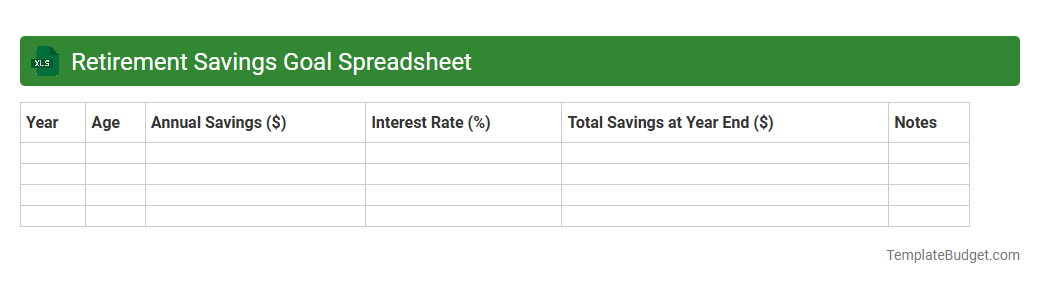
Retirement Savings Goal Spreadsheet
An Excel document titled "Retirement Savings Goal Spreadsheet" typically contains tables outlining monthly contributions, projected interest rates, and timeline estimates for retirement funds. It includes formulas to calculate the total savings accumulation based on variables like initial balance, annual return percentage, and inflation adjustments. Graphs or charts are often embedded to visually represent savings growth and milestones toward reaching the retirement goal.
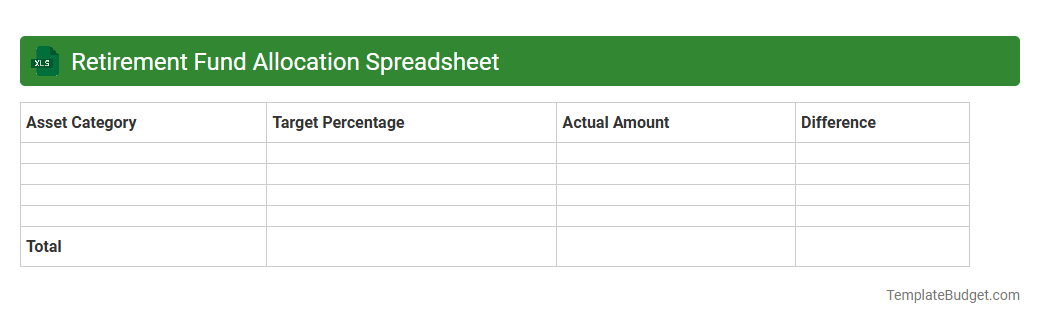
Retirement Fund Allocation Spreadsheet
A Retirement Fund Allocation Spreadsheet typically contains columns for asset categories such as stocks, bonds, mutual funds, and cash equivalents, along with their corresponding allocation percentages or dollar amounts. It often includes rows for different retirement accounts like 401(k), IRA, and Roth IRA, tracking contributions, growth projections, and target allocation adjustments over time. Key formulas calculate total portfolio value, expected returns, and risk metrics to assist in optimizing and monitoring investment strategies for retirement planning.
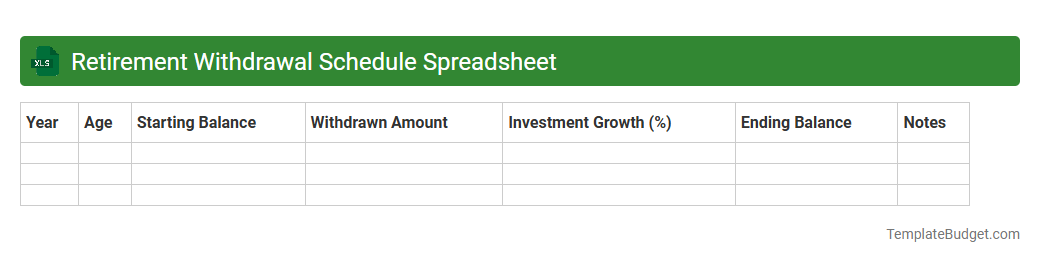
Retirement Withdrawal Schedule Spreadsheet
An Excel Retirement Withdrawal Schedule Spreadsheet typically contains columns for age, annual withdrawal amount, account balance, expected investment returns, and inflation adjustments. It includes formulas to calculate remaining balances after withdrawals, project cash flow over retirement years, and adjust for changing expenses or market fluctuations. These spreadsheets help retirees plan sustainable income streams while managing depletion risk and preserving capital longevity.
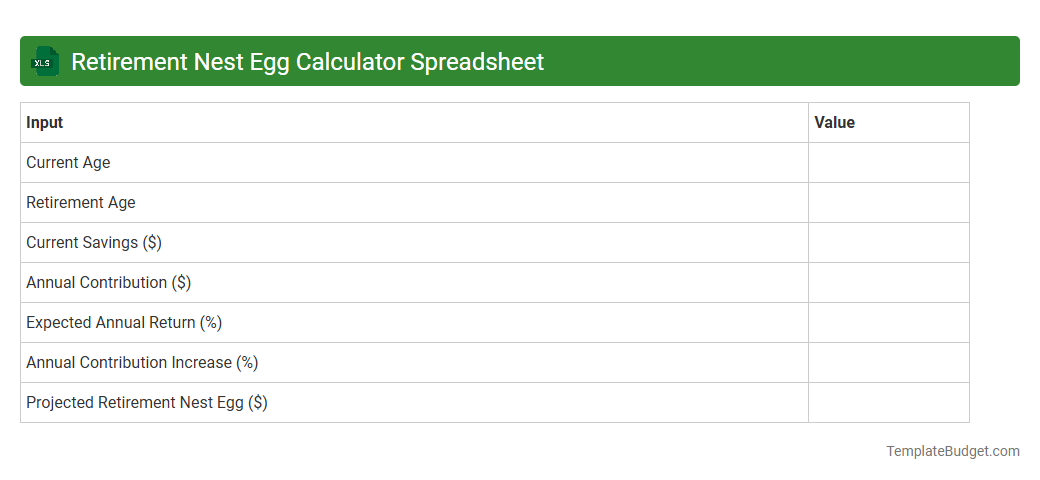
Retirement Nest Egg Calculator Spreadsheet
An Excel document titled "Retirement Nest Egg Calculator Spreadsheet" typically contains input fields for current age, planned retirement age, current savings, annual contributions, expected rate of return, and inflation rate. It uses formulas to project future retirement savings, calculating estimated nest egg value at retirement and potential monthly withdrawal amounts. Charts and summary tables often visualize savings growth over time and assess the sustainability of retirement funds.
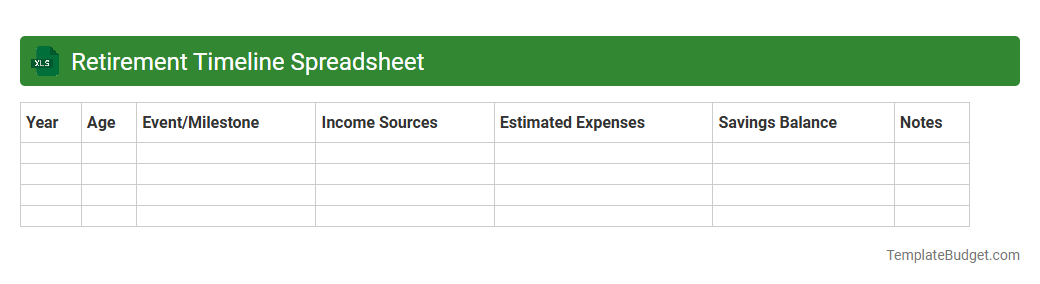
Retirement Timeline Spreadsheet
A Retirement Timeline Spreadsheet typically contains key financial data such as current savings, expected retirement age, monthly contributions, and projected growth rates. It includes timelines for major milestones like Social Security benefits eligibility, pension distributions, and required minimum distributions (RMDs). Charts and formulas track income sources, expenses, and gap analysis to ensure sustainable retirement planning.
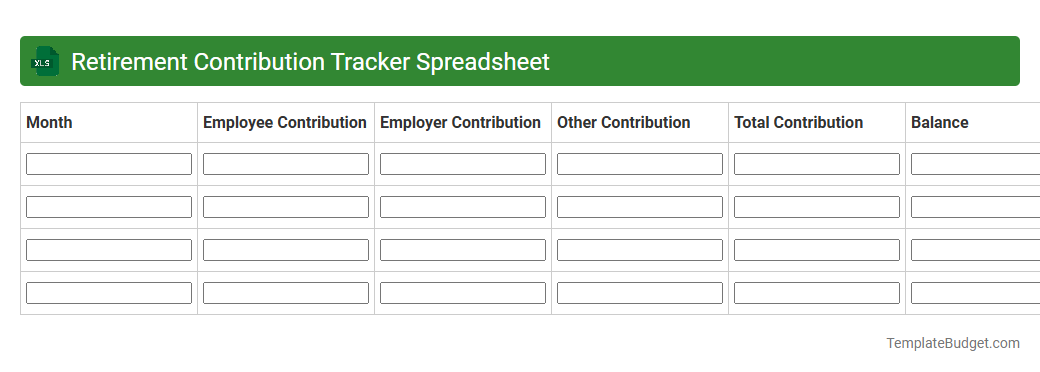
Retirement Contribution Tracker Spreadsheet
An Excel document titled "Retirement Contribution Tracker Spreadsheet" typically includes columns for employee names, contribution amounts, contribution dates, and employer match details. It often features formulas to calculate total contributions, year-to-date balances, and projected retirement savings based on various interest rates. Charts or graphs illustrating contribution trends and progress toward retirement goals may also be embedded within the spreadsheet.
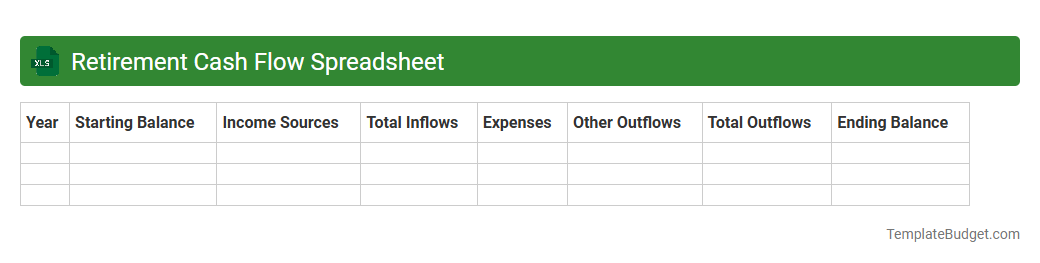
Retirement Cash Flow Spreadsheet
A Retirement Cash Flow Spreadsheet typically contains detailed projections of income sources such as Social Security, pensions, and investment withdrawals. It includes expenses categorized by housing, healthcare, utilities, and discretionary spending, with timelines extending through retirement years. The spreadsheet calculates net cash flow, helping retirees assess the sustainability of their savings and adjust withdrawal rates accordingly.
Introduction to Retirement Planning Spreadsheets
Retirement planning spreadsheets offer a structured way to organize and project your financial future. They serve as a comprehensive tool to track income, expenses, and savings over time. Utilizing these spreadsheets simplifies complex retirement planning processes.
Benefits of Using a Retirement Planning Spreadsheet
Using a retirement planning spreadsheet allows for clear visualization of your financial goals and progress. It enhances accuracy by automatically updating calculations, reducing the risk of errors. The customizable nature of spreadsheets makes them adaptable to your unique retirement needs.
Key Features of an Effective Retirement Spreadsheet
An effective retirement spreadsheet includes detailed inputs such as income sources, expenses, and investment growth. It provides dynamic charts for easier data interpretation and scenario analysis. The automation of calculations ensures real-time updates and improved accuracy.
Essential Data to Include in Your Spreadsheet
Critical data points include current savings, anticipated retirement age, expected rate of return, and future expenses. Incorporating inflation rates and Social Security benefits contributes to a realistic plan. Including all essential financial variables ensures an accurate retirement projection.
Step-by-Step Guide to Building a Retirement Spreadsheet
Start by listing all income sources and retirement expenses, then input current savings and estimate growth rates. Next, set up formulas to calculate net savings over years until and during retirement. The structured approach helps maintain an organized and reliable planning tool.
Top Retirement Planning Spreadsheet Templates
Popular templates often feature built-in calculations, customizable fields, and easy-to-understand visual aids. Many templates are available for free or purchase, catering to various complexity levels. Choosing a trusted template saves time and ensures thorough planning.
Common Mistakes to Avoid in Retirement Spreadsheets
Avoid overlooking inflation, underestimating expenses, or failing to update data regularly. Errors in assumptions like life expectancy or investment returns can distort outcomes. Being aware of common pitfalls helps maintain a realistic and effective retirement plan.
Tips for Keeping Your Spreadsheet Updated
Regularly review and adjust your spreadsheet to reflect changes in income, expenses, and market conditions. Schedule periodic check-ins to ensure your assumptions align with your current financial situation. Maintaining an updated and accurate spreadsheet is key to successful retirement planning.
Integrating Retirement Spreadsheets with Financial Tools
Linking your spreadsheet with budgeting apps and investment trackers provides a holistic view of your finances. Integration allows automatic updates and better data accuracy across platforms. Using connected financial tools enhances your retirement planning efficiency.
Final Thoughts on Spreadsheet-Based Retirement Planning
Spreadsheets offer a powerful foundation for personalized and flexible retirement strategies. When used correctly, they provide valuable insights into long-term financial health. Embracing spreadsheet-based planning empowers you to take control of your retirement future confidently.
More Retirement Excel Templates