Tracking household expenses is essential for managing budgets and achieving financial goals efficiently. A reliable household expense tracker helps categorize spending, identify saving opportunities, and maintain a clear overview of monthly cash flow. Explore the easy-to-use Excel template below to take control of your household finances today.
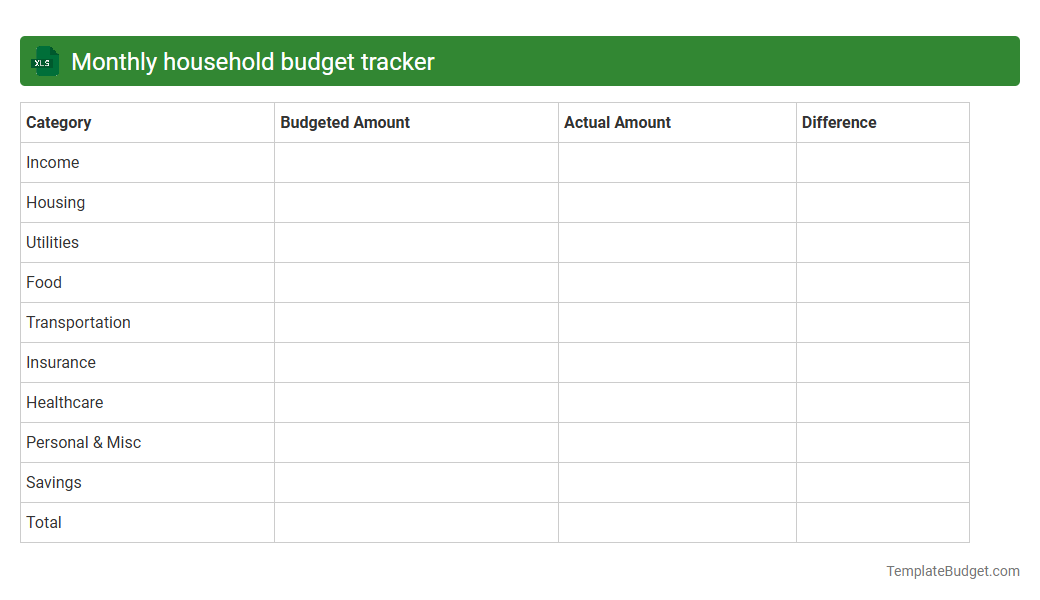
Monthly household budget tracker
An Excel document for a Monthly Household Budget Tracker typically contains categorized expense and income tables, including sections for rent, utilities, groceries, transportation, and entertainment costs. Formulas calculate total monthly expenses, income, and savings, providing visual aids such as charts or graphs to track spending trends and budget adherence. Conditional formatting highlights overspending areas, helping users manage finances effectively and plan for future expenses.
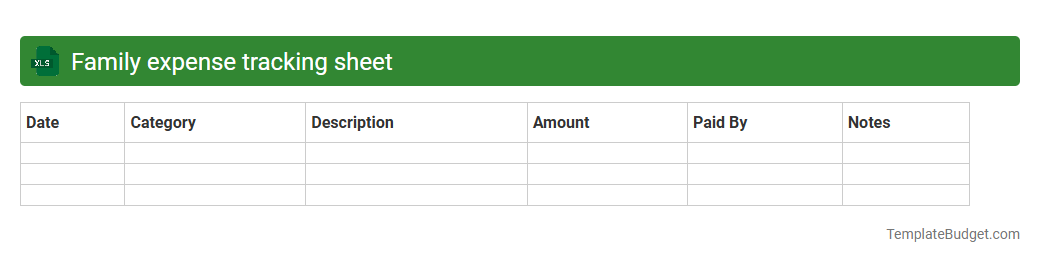
Family expense tracking sheet
An Excel family expense tracking sheet typically contains categorized expense entries such as groceries, utilities, rent, transportation, and entertainment, organized by date and payment method. It includes columns for income sources, monthly budgets, actual expenditures, and remaining balances to monitor financial health effectively. Charts and pivot tables are often embedded to visualize spending patterns and identify cost-saving opportunities.
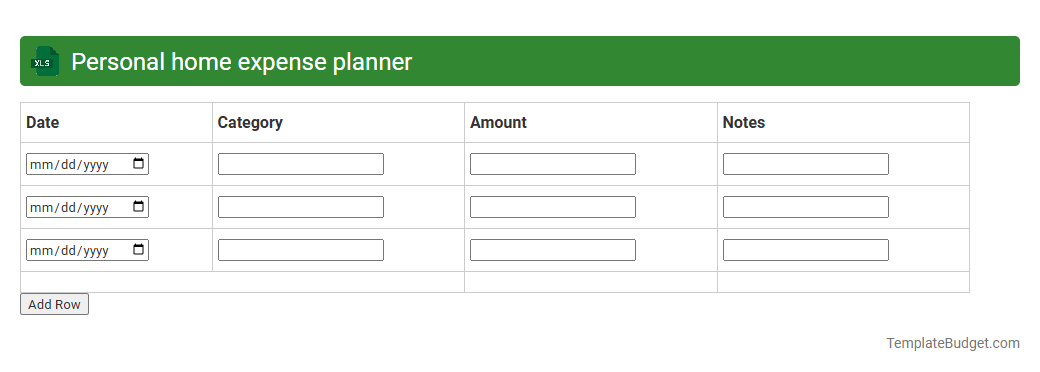
Personal home expense planner
An Excel document for a Personal Home Expense Planner typically includes categorized expense tables such as utilities, groceries, rent or mortgage, transportation, and entertainment. It features budget allocation sections, monthly income tracking, and expense summaries with charts or graphs for easy visualization of spending patterns. Formulas automate calculations for totals, variances, and savings goals, ensuring efficient financial management.
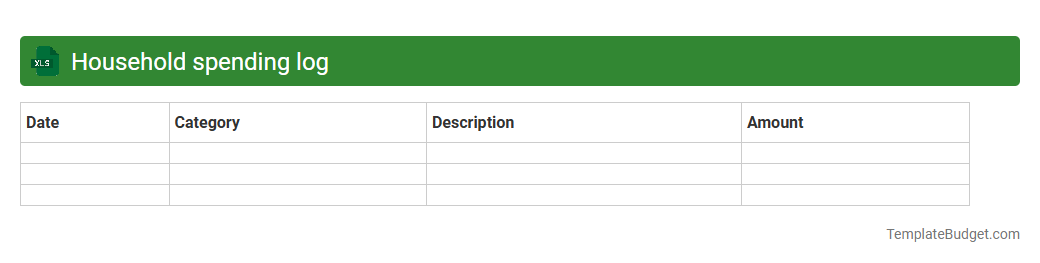
Household spending log
An Excel Household Spending Log typically includes columns for date, expense category (such as groceries, utilities, rent, and entertainment), and amounts spent. It often contains rows for individual transactions, allowing users to track daily, weekly, or monthly expenditures. Formulas may be used to calculate totals, averages, and category-specific spending to help manage budgets effectively.
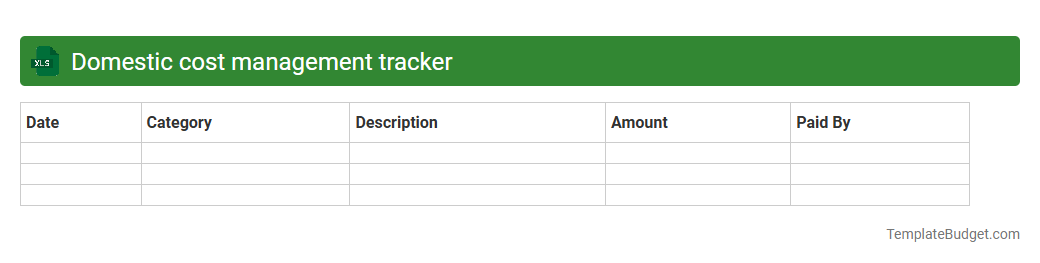
Domestic cost management tracker
An Excel document titled Domestic Cost Management Tracker typically contains categorized expense items such as utilities, groceries, rent or mortgage payments, transportation, and household maintenance costs. It often includes columns for dates, descriptions, amounts spent, payment methods, and budgeted versus actual costs to facilitate detailed tracking and comparison. Formulas and charts are frequently embedded to automate calculations, monitor spending trends, and help maintain the overall household budget efficiently.
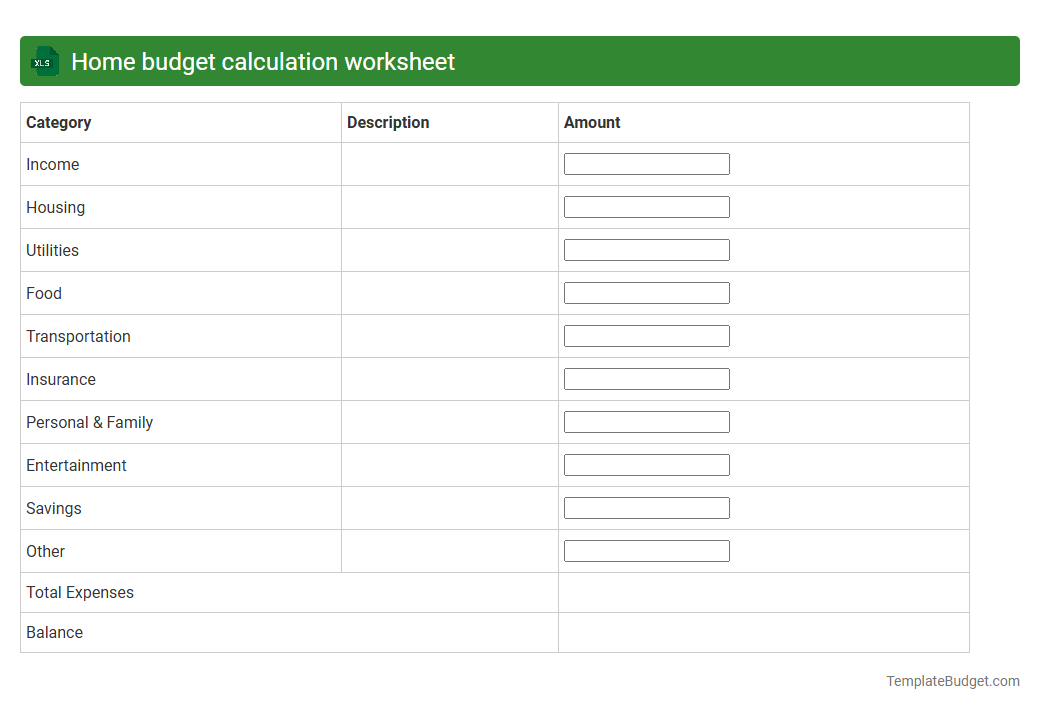
Home budget calculation worksheet
An Excel home budget calculation worksheet typically contains categorized expense and income tables, enabling users to track monthly spending and savings. It includes formulas for automatic totaling and percentage breakdowns of each category to visualize budget allocation effectively. Graphs or charts may be embedded to provide a clear overview of financial trends and help with future budget planning.
Household finance organizer
An Excel document designed as a Household Finance Organizer typically contains categorized sheets for tracking income, expenses, budgets, and savings goals. It includes tables with detailed transaction records, automatic calculations for monthly balances, charts visualizing spending patterns, and summary dashboards to monitor financial health over time. Key features often incorporate debt management sections, bill reminders, and customizable categories for personalized financial planning.
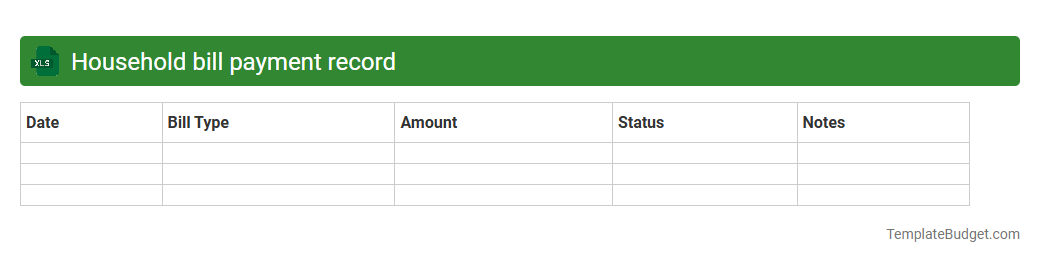
Household bill payment record
An Excel document for household bill payment records typically contains columns for payment dates, bill types such as electricity, water, internet, and gas, and corresponding amounts paid. It may include payment methods like credit card, bank transfer, or cash, as well as status indicators for paid, pending, or overdue bills. Organized rows often represent individual bill entries, enabling efficient tracking and budgeting of monthly household expenses.
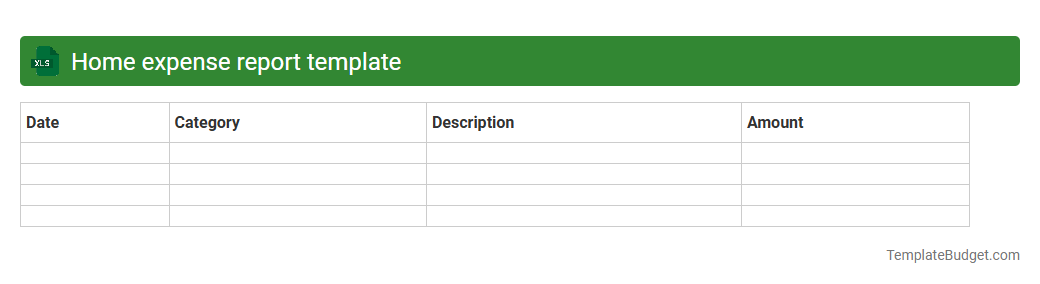
Home expense report template
An Excel Home Expense Report Template typically includes categories for utilities, groceries, rent or mortgage, transportation, and discretionary spending. It features columns for date, item description, payment method, and amount, facilitating detailed tracking of household expenses. Built-in formulas automatically calculate totals and monthly summaries to help manage budgets effectively.
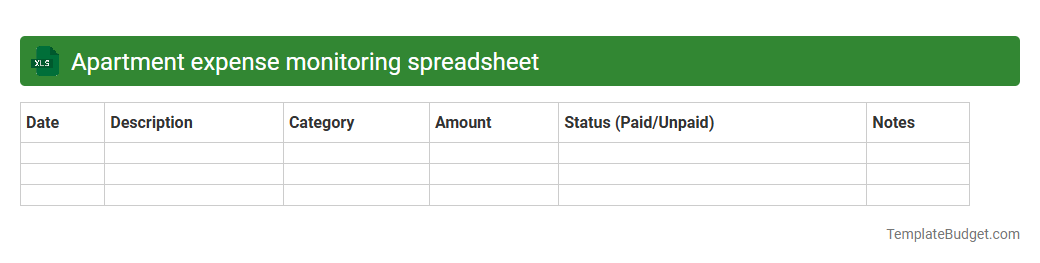
Apartment expense monitoring spreadsheet
An apartment expense monitoring spreadsheet typically contains categories such as rent payments, utility bills, maintenance costs, and amenity fees, organized by date and payment status. It includes columns for vendor names, amounts due, amounts paid, and due dates to help track timely payments and budget management. Detailed notes or comments sections often capture irregular expenses or upcoming financial obligations related to the apartment.
Introduction to Household Expense Tracking
Household expense tracking involves monitoring all money spent within a home to maintain budget control and improve financial health. This practice helps individuals and families gain clarity on their spending habits. Starting with a simple system can make the entire process manageable and less intimidating.
Benefits of Using a Household Expense Tracker
Using a household expense tracker offers better financial awareness and empowers users to identify unnecessary expenditures. It also helps in setting realistic budgets and achieving long-term savings goals. Regular tracking reduces financial stress and promotes responsible money management.
Essential Features of an Effective Expense Tracker
An effective expense tracker must include easy categorization, real-time updates, and clear reporting. It should allow users to customize categories suited to their lifestyle and provide visual summaries such as charts. A user-friendly interface ensures consistent use and maximizes benefits.
Choosing the Right Expense Tracking Method
Selecting the right tracking method depends on personal preferences, ranging from manual spreadsheets to automated digital apps. Each method offers different levels of detail and convenience, catering to diverse financial goals. Understanding your habits helps in choosing an approach that fosters consistency.
How to Set Up Your Household Expense Tracker
Setting up your tracker involves defining income sources, categorizing expenses, and establishing a routine for recording transactions. Start with basic categories like groceries, utilities, and entertainment for organized financial monitoring. Consistency during this initial phase lays the foundation for accurate tracking.
Categorizing and Recording Your Expenses
Properly categorizing expenses allows for easier analysis and budgeting by grouping similar transactions together. Use intuitive categories and subcategories to capture all spending accurately. Regularly update the tracker immediately after expenses to ensure comprehensive financial records.
Tips for Staying Consistent with Expense Tracking
Maintain consistency by setting reminders, choosing a convenient tracking tool, and reviewing your data frequently. Making the process simple and part of your daily routine encourages regular updates. Celebrating small progress keeps motivation high for ongoing financial discipline.
Analyzing Your Spending Patterns
Regular analysis of your tracked expenses reveals spending trends and areas to cut costs or optimize budgets. Look for categories with unexpectedly high expenditures and consider possible adjustments. Data-driven insights promote smarter financial decisions and long-term savings.
Tools and Apps for Managing Household Expenses
Various apps like Mint, YNAB, and PocketGuard offer features tailored for efficient expense management. These tools provide automation, notifications, and detailed reports to simplify tracking. Choose an app that matches your level of financial knowledge and tracking needs.
Common Mistakes to Avoid in Expense Tracking
Avoid mistakes such as neglecting small transactions, inconsistent data entry, and failing to review progress regularly. Overcomplicating the system can also discourage continuous use. Staying realistic and patient with the process ensures successful household expense management.
More Household Excel Templates