A Business Budget Excel Template streamlines financial planning by organizing income, expenses, and forecasting cash flow with precision. Utilizing this tool enhances decision-making and ensures effective resource allocation for sustainable growth. Explore the Excel template below to simplify your budgeting process and gain greater control over your business finances.
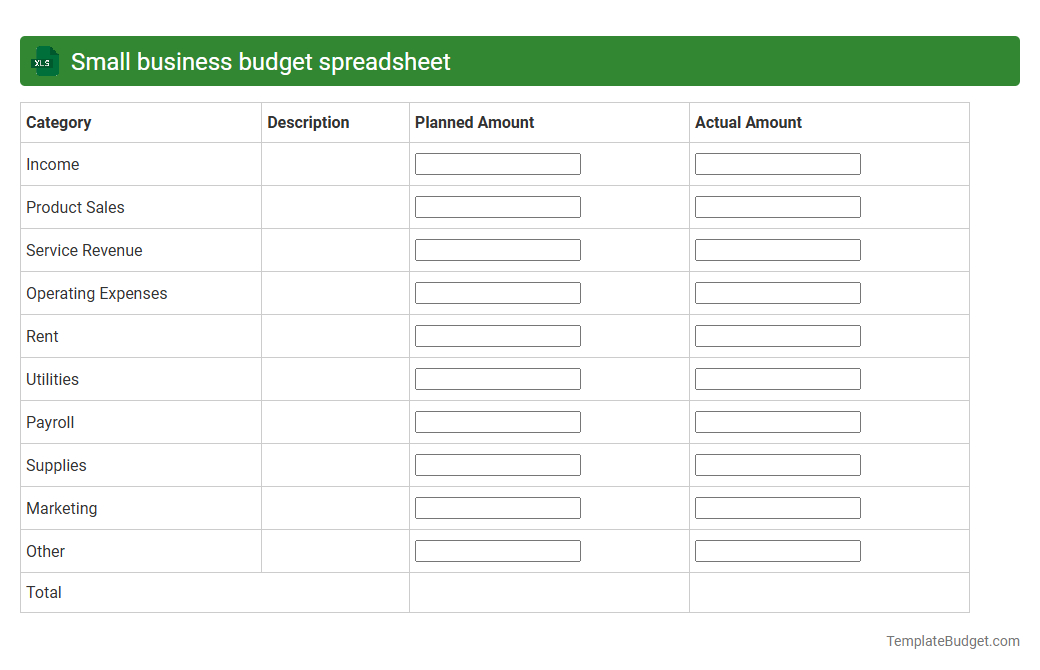
Small business budget spreadsheet
A small business budget spreadsheet typically contains revenue forecasts, expense categories, and profit margins organized into monthly or quarterly columns. It includes data cells for fixed costs such as rent and utilities, variable costs like supplies and marketing, and summary rows calculating net income and cash flow. Formulas automate calculations to provide real-time financial insights and support effective budgeting decisions.
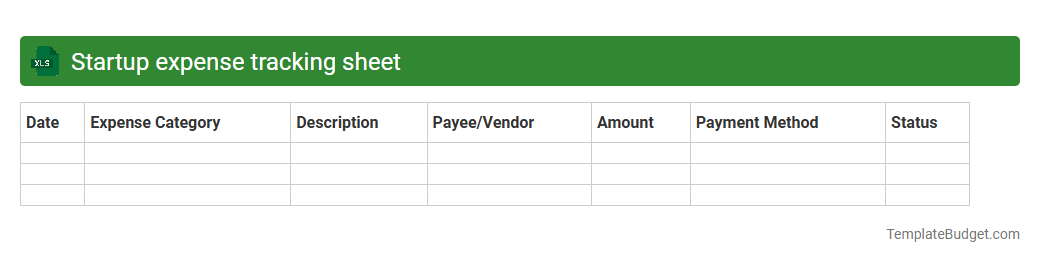
Startup expense tracking sheet
A startup expense tracking sheet in Excel typically contains categorized sections for various costs such as equipment, marketing, salaries, and office supplies, allowing entrepreneurs to monitor financial outflows accurately. It includes columns for dates, expense descriptions, vendor details, amounts, payment methods, and budget comparisons to ensure expenditures remain within planned limits. Built-in formulas and charts often provide real-time summaries and visual insights into cash flow trends, enabling better financial decision-making during the early stages of a business.
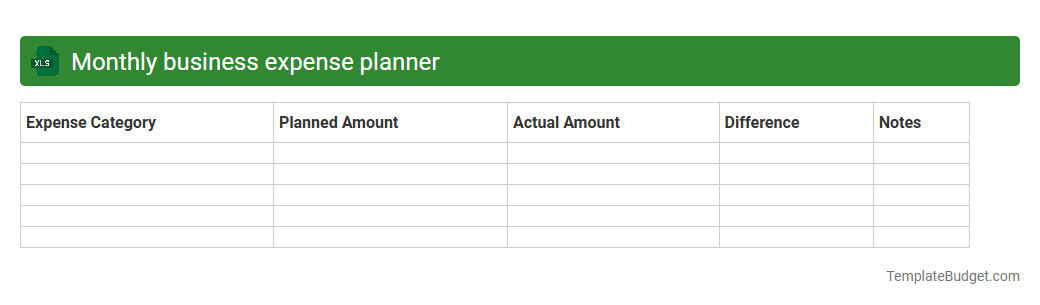
Monthly business expense planner
An Excel document titled "Monthly Business Expense Planner" typically contains categorized expense entries such as rent, utilities, salaries, marketing costs, and office supplies. It includes columns for dates, descriptions, amounts, payment methods, and budget comparisons to track actual versus planned expenses. Charts and summary tables are often present to visualize spending patterns and support financial decision-making.
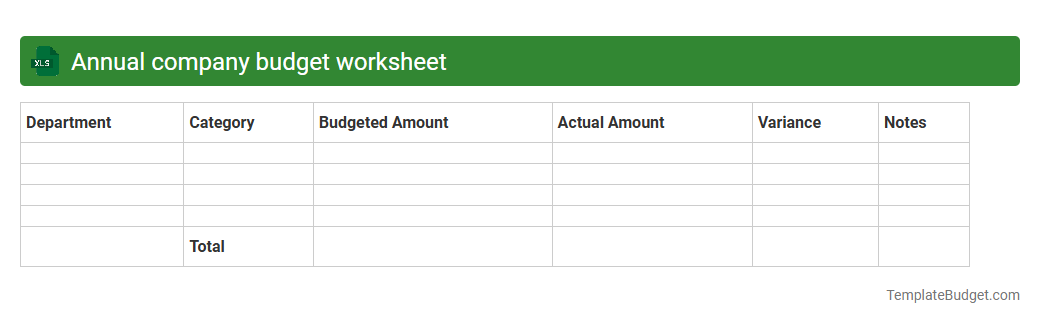
Annual company budget worksheet
An Annual Company Budget worksheet typically contains detailed financial data including projected revenues, operating expenses, capital expenditures, and cash flow forecasts organized by month or quarter. It includes various budget categories such as salaries, marketing costs, utilities, and office supplies, along with formulas to calculate totals, variances, and percentage changes. This structured layout facilitates comprehensive financial planning, performance tracking, and decision-making for company management.
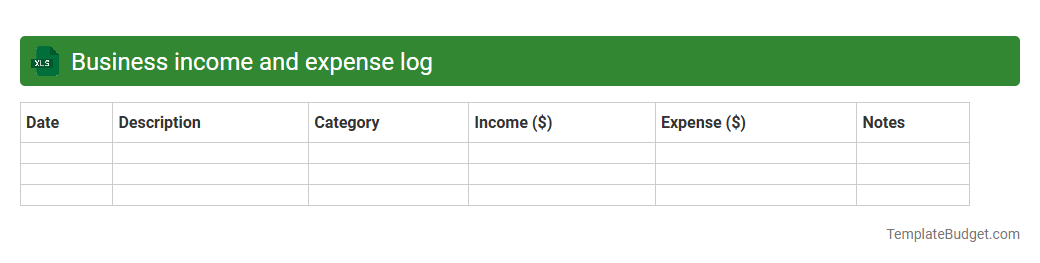
Business income and expense log
An Excel document labeled Business Income and Expense Log typically contains detailed records of revenue streams, categorized expenses, dates of transactions, and payment methods. It includes columns for client names, invoice numbers, amounts received, and recurring cost entries such as rent, utilities, and salaries. This structured data facilitates financial tracking, budgeting, and generating profit and loss statements for business analysis.
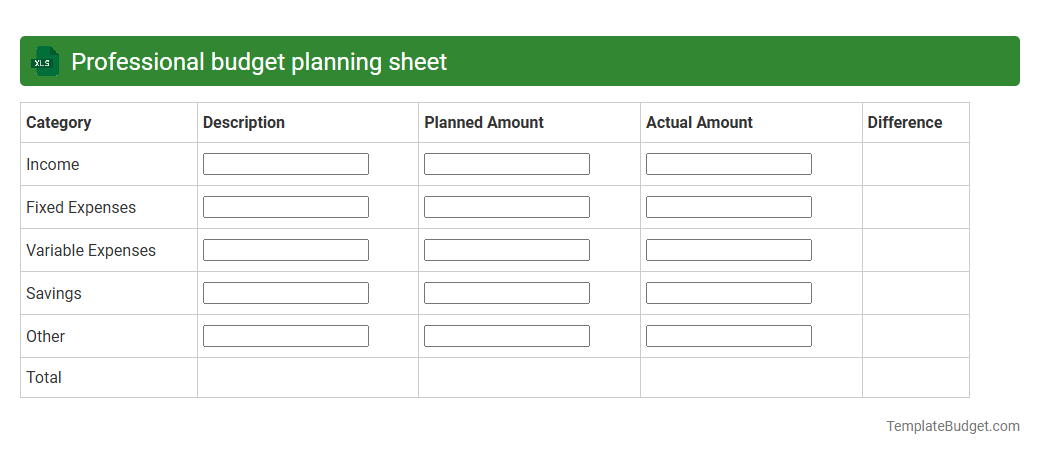
Professional budget planning sheet
A professional budget planning Excel document typically contains categorized income and expense sections with detailed line items, formulas for automatic calculation of totals and variances, and dynamic charts to visualize financial data. It often includes monthly and annual budget summaries, cash flow projections, and customizable templates for tracking actual versus forecasted spending. Advanced sheets may incorporate pivot tables, conditional formatting, and data validation to enhance accuracy and user interaction.
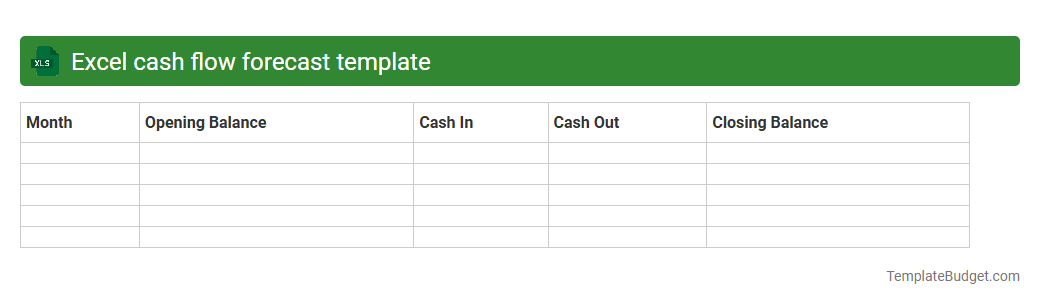
Excel cash flow forecast template
An Excel cash flow forecast template typically contains sections for projected income, expenses, and net cash flow organized by time periods such as weeks, months, or quarters. It includes input fields for sales forecasts, operating costs, loan repayments, and capital expenditures, often accompanied by formulas that calculate cumulative cash balances and highlight cash shortfalls. Charts and summaries visually represent financial trends, enabling businesses to plan liquidity and manage cash effectively.
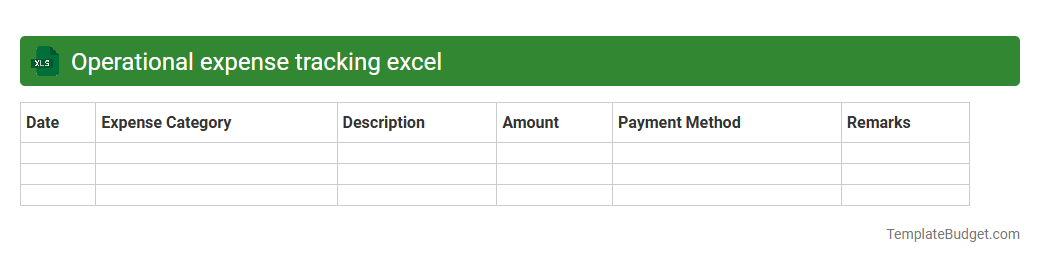
Operational expense tracking excel
An operational expense tracking Excel document typically contains categorized expense entries, dates, payment methods, and vendor information to monitor and manage business costs efficiently. It includes formulas and functions for automatic calculation of totals, variances, and budget comparisons, helping to identify spending patterns and optimize resource allocation. Charts and pivot tables are often embedded to visualize trends and support financial decision-making in operational management.
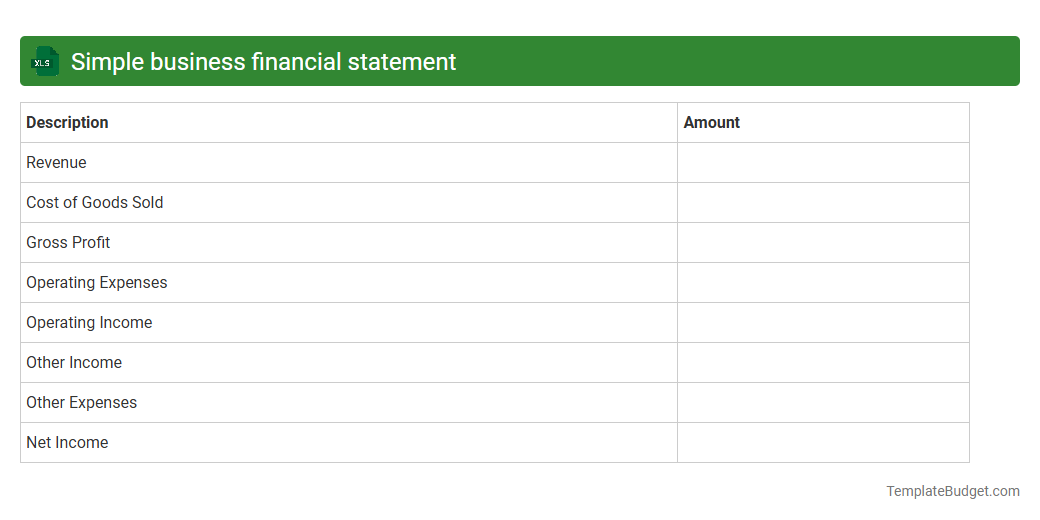
Simple business financial statement
An Excel document containing a simple business financial statement typically includes key components such as income statements, balance sheets, and cash flow statements. It organizes revenue, expenses, assets, liabilities, and equity data into clear rows and columns for easy analysis. Formulas and charts are often integrated to automate calculations and visually represent financial performance trends.
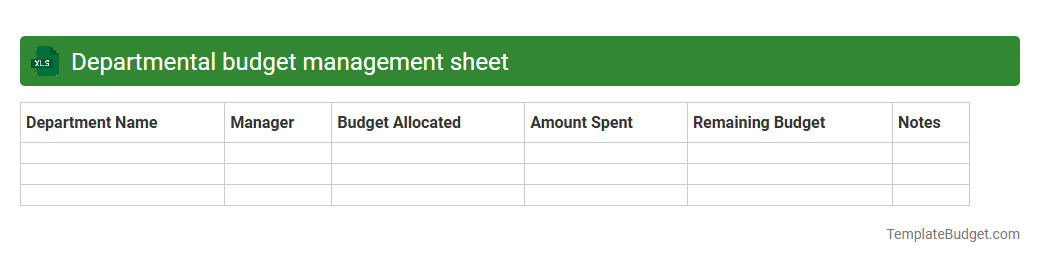
Departmental budget management sheet
An Excel departmental budget management sheet typically contains categorized expense and revenue entries, monthly or quarterly financial projections, and actual spending comparisons. It includes formulas to calculate variances, percentage changes, and summaries to track budget adherence and financial performance. Pivot tables and charts often visualize data trends for efficient decision-making and resource allocation.
Introduction to Business Budget Excel Templates
Business Budget Excel Templates are powerful tools designed to help companies plan and track their financial activities efficiently. These templates simplify complex budgeting processes by providing a structured framework to organize income and expenses. Utilizing these templates enables businesses to maintain financial clarity and make informed decisions.
Key Features of an Effective Budget Template
An effective budget template includes clear categories for revenue, expenses, and profit margins. It should allow for easy data entry, automatic calculations, and visual summaries such as charts or graphs. The user-friendly interface ensures that both financial experts and novices can manage budgets confidently.
Benefits of Using Excel for Business Budgeting
Excel offers flexibility with its vast functions, formulas, and customization options, making it ideal for budgeting tasks. Its ability to handle large datasets and generate real-time reports supports dynamic financial planning. The accessibility and adaptability of Excel help businesses tailor budgets to their unique needs.
Essential Components of a Budget Spreadsheet
A comprehensive budget spreadsheet typically includes sections for projected income, fixed and variable expenses, and cash flow analysis. It should incorporate built-in formulas to calculate totals and variances automatically. The inclusion of summary tables helps stakeholders quickly understand the financial status.
Step-by-Step Guide to Creating a Budget Template in Excel
Start by listing all income sources and expense categories in separate rows or columns. Use Excel formulas like SUM and IF to automate calculations and conditional formatting for visual cues. Finally, create charts to visualize budget vs. actual comparisons, ensuring a clear and concise layout for easy interpretation.
Customization Tips for Your Business Budget Template
Tailor your budget template by adding specific categories relevant to your industry and business size. Incorporate drop-down menus for standardized data entry and use cell protection to avoid accidental changes. Customization enhances accuracy and usability, making your budget more practical.
Common Mistakes to Avoid in Budget Planning
Avoid neglecting to update the budget regularly or excluding variable costs that can impact cash flow. Overlooking small expenses and failing to forecast future revenue trends are common pitfalls. Ensuring precision and flexibility is crucial for a realistic and effective budget.
Integrating Forecasting and Reporting Tools
Integrate forecasting models within your budget template to predict future financial performance based on historical data. Use Excel's PivotTables and charts for dynamic reporting and trend analysis. This integration provides data-driven insights vital for strategic planning.
Free and Paid Excel Budget Template Resources
Numerous websites offer free and premium Excel budget templates tailored to various business needs. Free templates are accessible for basic budgeting, while paid versions often include advanced features and support. Choosing the right template depends on your budget complexity and desired functionality.
Best Practices for Maintaining and Updating Your Budget
Regularly review and update your budget to reflect current financial conditions and business goals. Maintain organized data inputs and back up your Excel files to prevent loss. Consistent maintenance ensures your budget remains a valuable tool for financial management and decision making.
More Business Excel Templates